


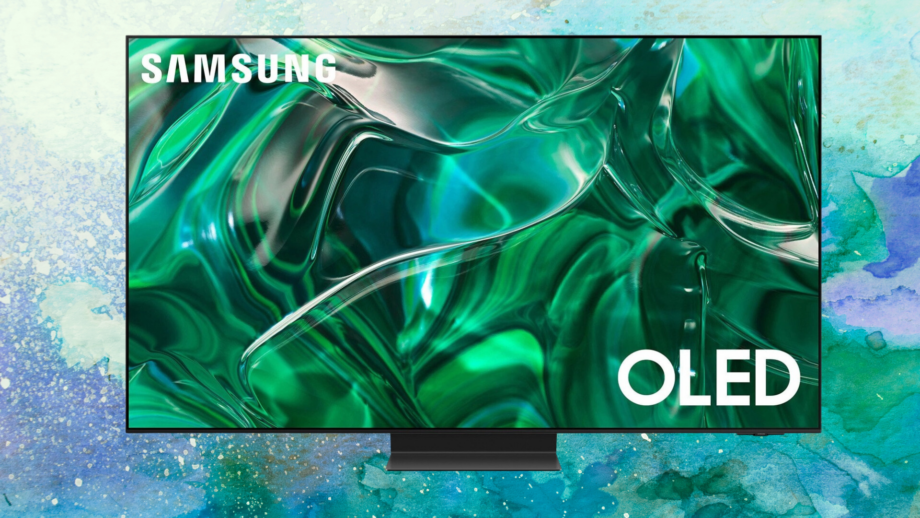
If you’re after the best TV, you’ve come to the right place with this selection of the best screens that Trusted Reviews has tested.
We’re always comparing new models against both new and existing ones to determine which screen offers the best performance. This list represents plenty of argonising hours that have gone into testing, with the following models the ones we rate as the best performers.
We’ve assessed these TVs in dedicated testing facilities as well as in our homes, carrying out tests that measure brightness, colour accuracy and input lag. But it’s not just about stats. We live with these TVs, evaluating their picture and audio with films, TV shows, and music, assess their smart and gaming features to see whether it’s an enjoyable TV to own.
If you can’t find what you’re looking for on this list, we do have other lists to help in your search for a new TV. There is our best cheap TVs for affordable options, our best 4K sets if you’re looking for great HDR performance between £1000 and £2000.
If you want the cutting edge of TV technology, consider our best 8K TVs. For those who want cinema-like picture quality then check out our best OLED TVs.
Best TV at a glance
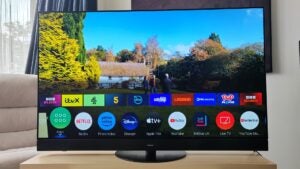
- Best all-in-one TV: Panasonic TX-55MZ2000 – check price
- Best LG TV: LG OLED65G2 – check price
- Best home cinema TV: Sony XR-55A80L – check price
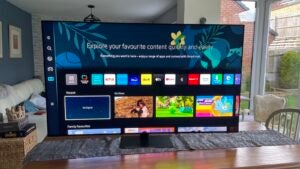
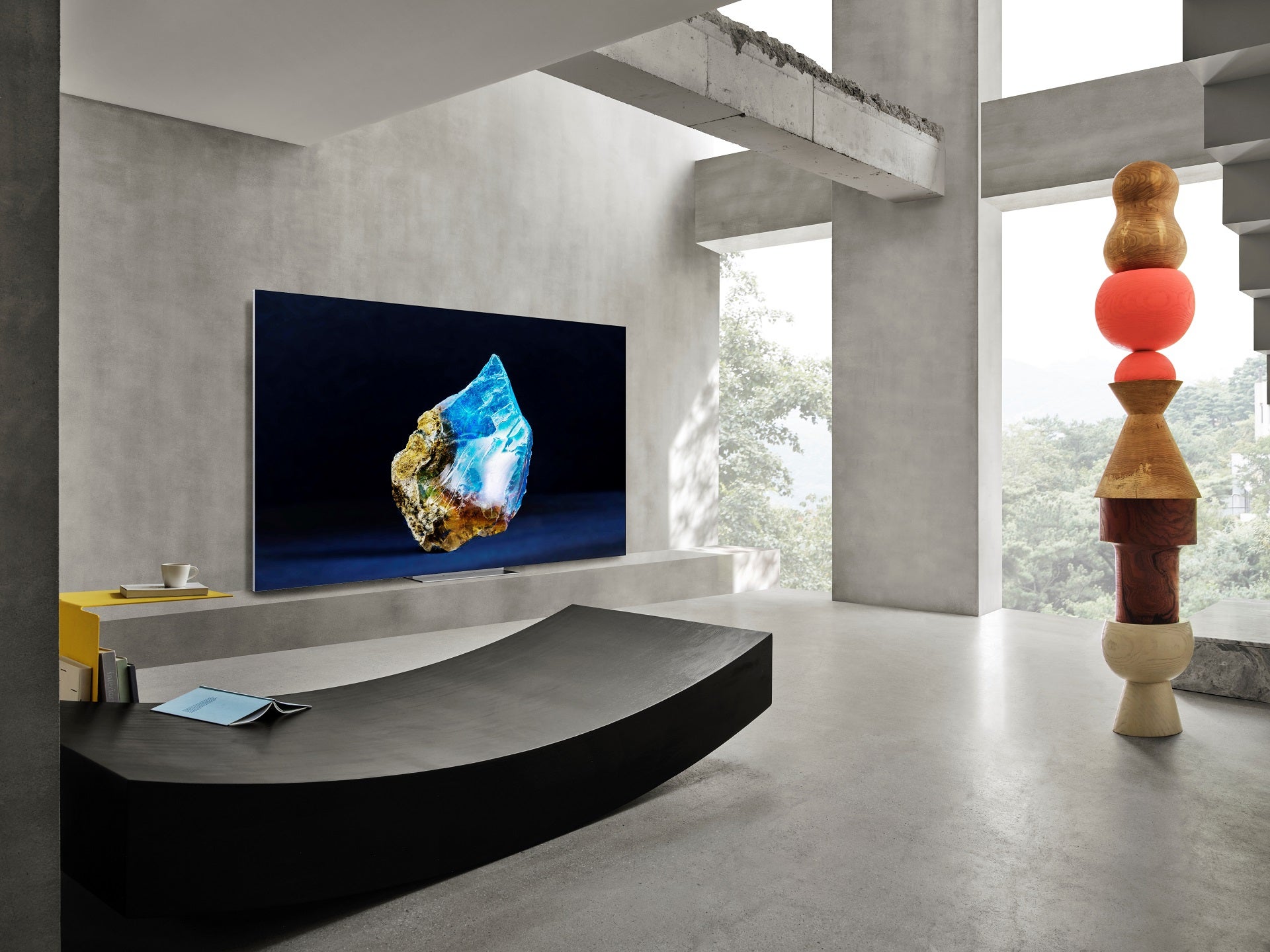
- Best Mini LED TV: Samsung QE65QN95C – check price
- Best small TV: Philips 48OLED807 – check price
- Best budget smart TV: TCL 55RC630K – check price
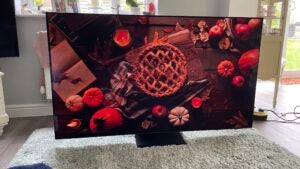
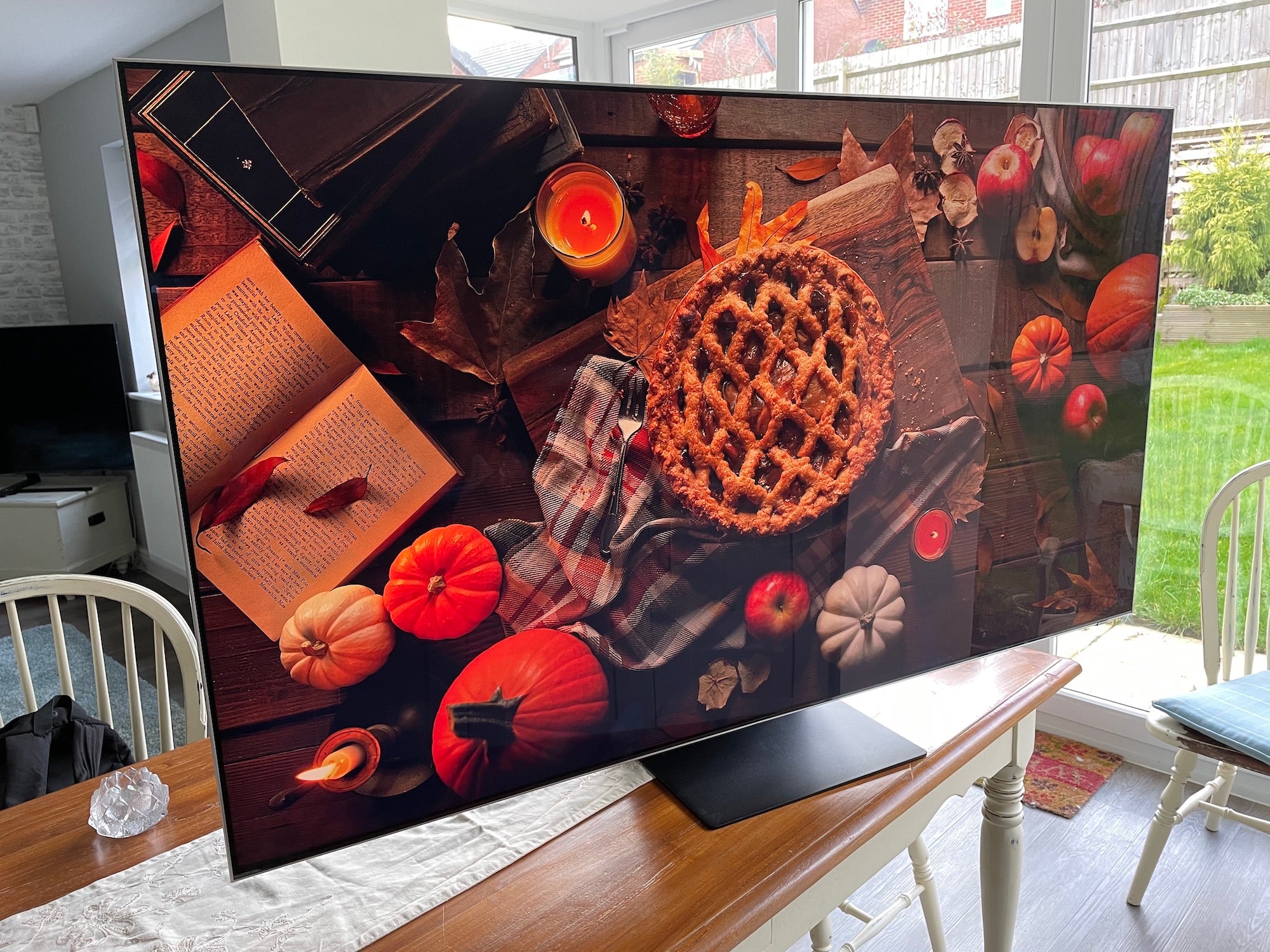
- Best QD-OLED: Samsung S95D OLED – check price
- Best 8K TV: Samsung QN900D – check price
- Best affordable Mini LED TV: TCL C845K – check price
How we test
Every TV we review is put through the same set of tests to gauge its picture performance, usability, and smart features.
Tests are carried out over several days and are done by eye but supported with technical measurements. Testing by eye involves an expert watching a wide range of material to understand and determine a TV’s performance in fields such as brightness, contrast, motion processing, colour handling and screen uniformity.
We’ll consider the design of the TV in terms of build quality, study the spec sheets and see if the TV’s connections are up to spec, as well as playing video and audio content to ensure that the set handles playback as it claims. We also take note whether a product’s compatible formats and features are in line with industry trends or not to gauge whether it’s relevant for you.
Comparison to other related and similarly priced products is also important, to see if it’s missing any vital features and whether it impresses as a whole. After all this, we’ll come to a judgement on how the TV performs as a whole.
If you want to learn more, please visit our detailed page about how we test televisions.
 Best LG TV
- Excellent HDR performance
- Improved motion skills
- Accommodating gaming features
- Slim design
- Wide selection of streaming apps
- Higher starting price than G1
- Average audio
- Stand is optional extra
 Best 48-inch OLED TV
- Sharp, detailed and colourful image
- Better-than-expected sound
- Competitive gaming features
- Stylish design
- Ambilight, of course
- Not as bright as expected
- LG OLED better overall for gaming
- Remote can be frustrating
 Best Mini LED TV
- Stunningly bright, colourful pictures
- Groundbreaking LCD black levels
- Excellent gaming support and connectivity
- No Dolby Vision support
- A few backlight niggles
 Best QD-OLED
- Stunning, ground-breaking picture quality
- Gorgeous Infinity One design
- Outstanding gaming support
- No Dolby Vision
- Expensive even by OLED standards
- Smart interface can be unhelpful
 Best budget TV
- Quick to assemble
- Excellent smart interface
- Quick input lag for gaming
- Impactful sound system
- Multi-HDR support
- Limited brightness with HDR
- HDR10+ performance doesn’t have the greatest impact
 Best TV
- Excellent HDR performance
- Dolby Vision IQ HDR support
- 360° Soundscape Pro Dolby Atmos system
- Game Board UI
- Only two HDMIs support 4K 120Hz
- Price
 Best home cinema TV
- Nuanced, natural picture performance
- Slick Google TV user experience
- Accommodating design
- Good sound for a TV
- Competitively priced
- Gaming best suited to PS5 owners
- Not as bright as rivals with HDR

- Stunning brightness and contrast
- Outstanding gaming support
- Beautiful futuristic design
- Some slight instability with HDR in Standard mode
- No Dolby Vision HDR support
- Slight black crush, especially in Standard mode
- Outstanding 8K and upscaled 4K pictures
- Impressive brightness and power management
- Spectacular design and excellent connectivity
- It puts a serious dent in your bank account
- Some backlight distractions in Standard mode
- Sounds a bit feeble for such a premium TV
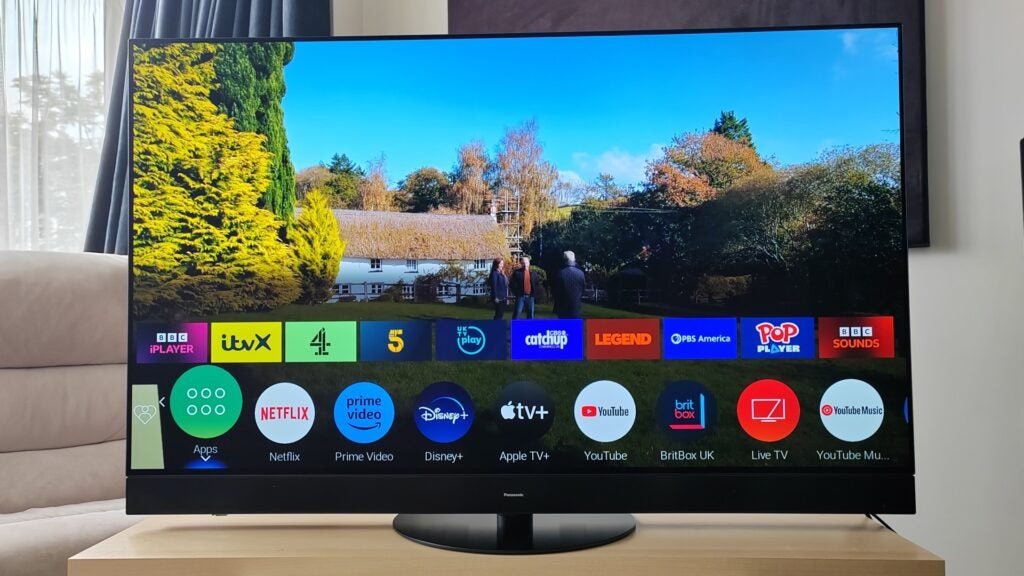
Panasonic TX-55MZ2000
Best all-in-one TV

Pros
- Excellent HDR performance
- Dolby Vision IQ HDR support
- 360° Soundscape Pro Dolby Atmos system
- Game Board UI
Cons
- Only two HDMIs support 4K 120Hz
- Price
Our current top pick for 2024 remains the award-winning Panasonic MZ2000.
The biggest difference to its predecessor, the LZ2000, is the MZ2000’s MLA OLED panel. Created by LG Display and further customised by Panasonic, our reviewer found it offered a huge jump in brightness in its Standard mode preset, registering 1500 nits on a 5% window, and a mighty 1877 nits on a 10% patch in Dynamic mode. Alongside the LG G3 OLED, it’s one of the brightest OLEDs on the market.
We found that highlights burnt with intensity, images shine with punch and depth. Contrast is excellent, skin tones are naturally conveyed and reds and blues take on a rich, deep look. With support that covers all HDR formats: HDR10, HLG, Dolby Vision IQ and HDR10+ Adaptive, the picture performance makes the MZ2000 the jewel in Panasonic’s crown.
The MZ2000 is a good choice for brightly lit rooms as it has the brightness to dispel reflections or ambient light from causing distractions. The swivel design of the central design can also help evade annoying glare and reflections too.
My Home Screen remains easily accessible and customisable, with Freeview Play adding the UK catch-up apps along with big hitters in Netflix, Disney+, Apple TV+ and others. The Game mode has been updated with two modes to choose from in Game and True Game, the latter offers accurate colour performance much like Filmmaker mode does for film and TV.
We measured input lag at 14.5ms, which is not as good as the LG G3 OLED or Samsung S95C OLED but is brisk enough for competitive gaming. HDMI 2.1 technologies such as VRR, ALLM, 4K/120Hz, but they’re only available on two HDMI inputs.
We found sound quality was equally top notch with the side- and upfiring speakers conveying a large presence in a living room. It remains light on bass, however, failing to give bass-heavy scenes the emphasis they require. Nevertheless, this is one of the best-sounding TVs on the market. If you find the price too dear on your wallet, the Panasonic MZ1500 is an excellent alternative.
The upcoming Panasonic Z95A will feature an even brighter MLA panel and a new interface, as Panasonic is ditching its My Home Screen for Fire TV. There are some potential pitfalls with that decision, but there’s no doubt that if you felt Panasonic’s weakest area was its smarts, then the Z95A will remedy that.
Reviewer: Steve May
Full Review: Panasonic MZ2000

Samsung QE75QN900D
Best 8K TV
Pros
- Outstanding 8K and upscaled 4K pictures
- Impressive brightness and power management
- Spectacular design and excellent connectivity
Cons
- It puts a serious dent in your bank account
- Some backlight distractions in Standard mode
- Sounds a bit feeble for such a premium TV
While there are still questions marks over whether 8K TVs will become a mainstream proposition, Samsung is still leading the push, and the QN900D is arguably its best flagship 8K TV ever.
Peak brightness has been raised with the Movie mode now hitting 2445 nits compared to the QN900C‘s 2096 nits. That high level of brightness, which is beyond what an OLED can produce, feeds into impressively bright and colourful HDR images. The lack of Dolby Vision, however, remains a disappointing omission.
Of course, there is a lot of native 8K content about, so the Samsung QN900D’s main task is to take 4K content and make it look better, and in that respect, it achieves its task. Our reviewer noticed a big jump in detail with upscaled 4K images, Samsung’s latest AI processor is able to bring out and refine the detail within the image without producing a soft or noisy image. It’s 4K content but looks better than anything a 4K TV can manage.
The excellent motion processing can now track fast-moving objects without introducing motion blur that often afflicts LCD LED TVs.
Input lag is 11ms, and VRR technology in HDMI VRR and AMD FreeSync Premium Pro brings the latency down even further. With all four of its HDMI inputs supporting 4K 120Hz gaming, you won’t need to worry about which HDMI port to place your console or PC in.
The sound system tracks sounds accurately across the screen but like the QN900C, it doesn’t have enough bass to give soundtracks heft. It’s still capable of producing a wide soundstage with good levels of detail, but you should consider a soundbar to go with this TV.
Reviewer: John Archer
Full Review: Samsung QE75QN900D

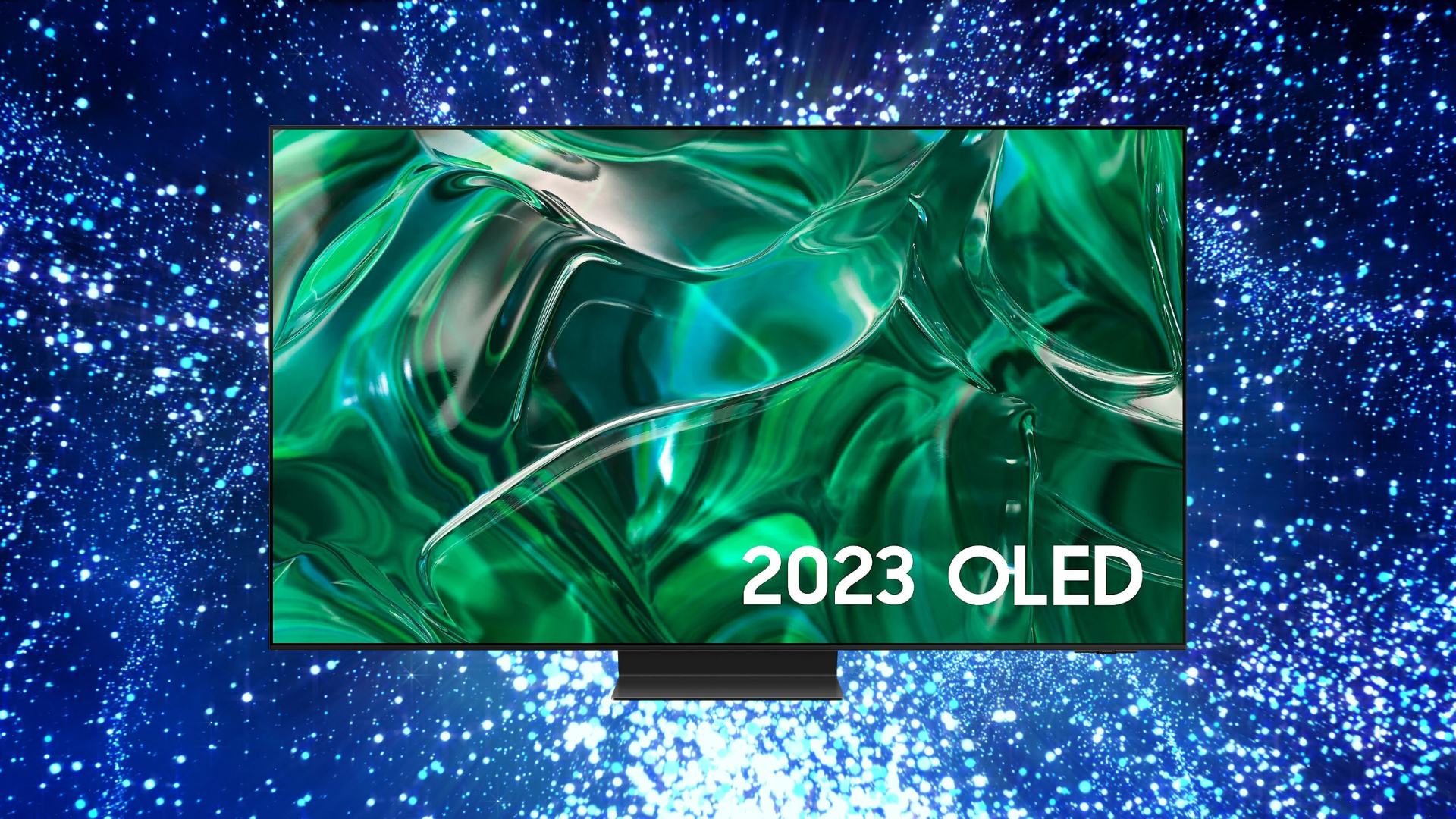
Samsung QE65S95D
Best QD-OLED
Pros
- Stunning brightness and contrast
- Outstanding gaming support
- Beautiful futuristic design
Cons
- Some slight instability with HDR in Standard mode
- No Dolby Vision HDR support
- Slight black crush, especially in Standard mode
We’re now onto the third-generation of Samsung’s QD-OLED screen and the S95D appears to have hit its stride.
The first and second-gen QD-OLEDs from Samsung were enjoyable, though we found they had some flaws. Those issues appear to have been resolved by the S95D. It is the brighest OLED TV we’ve reviewed, producing 1798 nits on a 10% window, beating the likes of the Panasonic MZ2000 and LG G3 OLED
It’s a TV that offers strong sharpness and detailing, and according to our reviewer, produces incredibly rich colours with contrast that brings out the detail in both dark and light areas of the image. We did notice some instability in maintaining brightness in its Standard mode, which is rectified by switching to its Movie mode. Our reviewer also felt that the anti-glare screen technology was impressively implemented on this TV, though it does mean that dark areas do take on a slightly grey appearance.
The Tizen interface has been enhancec with the introduction of new sections and the ability to create multiple profiles to feed recommendations to. Gaming-wise we measured input response of the game mode at 9.8ms, and all four of the HDMI 2.1 inputs support 4K 120Hz through the One Connect box and with 144Hz supported for PCs.
The sound system supports Dolby Atmos, and like with Samsung;s other OTS speaker systems, it’s very good at placing effects on and around the screen with accuracy. However, while it can produce a wide soundstage, it can’t push that sound forward into a room, and volume is a little limited in terms of how loud it can do.
Reviewer: John Archer
Full Review: Samsung S95C OLED

LG OLED65G2
Best LG OLED TV
Pros
- Excellent HDR performance
- Improved motion skills
- Accommodating gaming features
- Slim design
- Wide selection of streaming apps
Cons
- Higher starting price than G1
- Average audio
- Stand is optional extra
When we reviewed the G1, we called it the best LG OLED TV we’ve tested, but that accolade shifts to the G2 OLED. Even though the G3 OLED is a brighter performer with HDR content, we found a lack of improvement in its audio performance and a few issues with its picture.
The G2 sticks with the same uniformly flat rear panel for wall-mounting as before, but features extra improvements to the OLED EX panel with its OLED Evo processing to reap a bright HDR performance.
We measured the HDR performance on a 10% window to be just over 1000 nits. That’s better than the C2 though not as bright as the Samsung S95B or newer S95C. Nevertheless, the extra brightness results in brighter, more intense highlights for greater contrast and depth in the image.
Detail levels are high, with images fed a good deal of sharpness and colours rendered in a lush manner, especially with Dolby Vision IQ. Upscaling of less than 4K resolution is strong and motion has been improved. Not as good as the still available Sony’s A95K or Panasonic LZ2000, but much smoother and less distracting than previous LG TVs.
For gaming the G2 supports HDMI 2.1 across all the HDMI inputs, with ALLM, VRR and 4K/120Hz available, making it easier to plug your sources in without having to pick and choose the input. LG has also beefed up its clouding options with Nvidia GeForce NOW.
We measured input lag at 12.9ms – slightly better than the Panasonic MZ2000 though it doesn’t beat Samsung’s OLEDs. With VRR that figure can be reduced further for a more fluid gameplay performance.
The sound remains the weakest aspect of the G2’s performance, sounding restrained in its Dolby Atmos mode and lacking the impact the Sony A95K delivers. We found it sounded better with non-Atmos soundtracks offering more detail and dynamism. With the G2 OLED coming to its end of life, now is a great time to purchase this TV.
Reviewer: Kob Monney
Full Review: LG OLED65G2
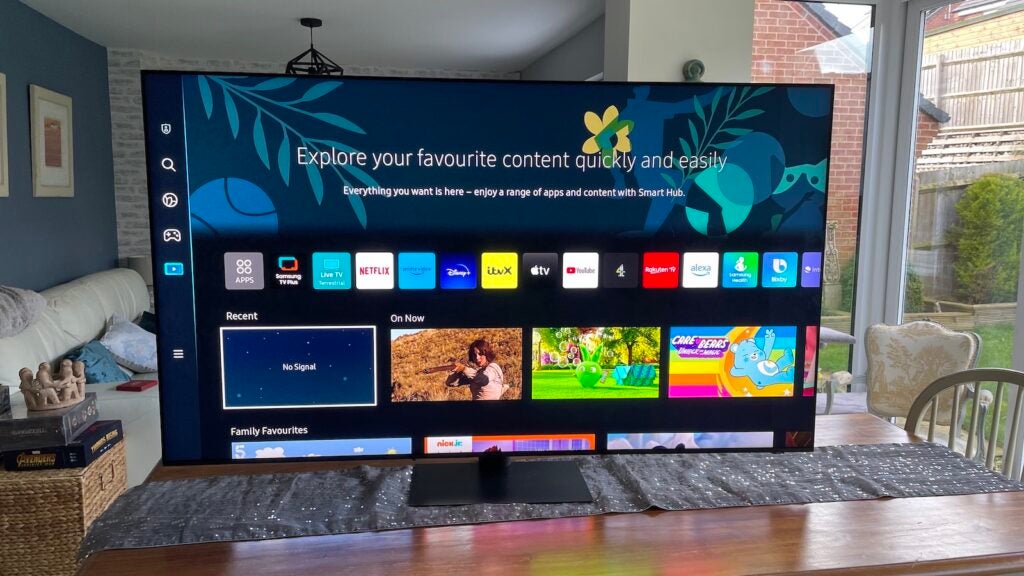
Samsung QE65QN95C
Best Mini-LED TV
Pros
- Stunningly bright, colourful pictures
- Groundbreaking LCD black levels
- Excellent gaming support and connectivity
Cons
- No Dolby Vision support
- A few backlight niggles
The QN95C replaces the QN95B Mini LED, and the biggest improvement with the former can be found within its local dimming system.
Samsung has boosted the number of dimming zones from 720 to 1344, and this has improved everything from black levels, contrast, and brightness with HDR content. Our reviewer found that blooming was significantly reduced from pretty much every viewing position. Unless you’re watching content from a very extreme angle, blooming is less of an issue than with previous models.
Black levels hit OLED-levels of performance, and in terms of brightness the QN95C can hit over 2000 nits of peak brightness on a 10% HDR window. Colours are bright, bold and wide-ranging, and we found its performance upscaling HD and SD sources to be expertly done, retaining plenty of detail without generating exaggerated picture noise.
The Tizen smart system is the same as the 2022 version, and it remains a comparative disappointment with some unhelpful navigation choices. Some tweaks have been made to make some content more visible within the home page interface and the number of channels within the free TV Plus service has been expanded.
We measured input lag at 9.8ms, a few milliseconds faster than the QN95B’s and faster than the LG OLED65C2. The Game Bar returns, allowing settings to be adjusted on the fly and there’s FreeSync Premium Pro as well as (unofficial) Nvidia G-Sync support for PC titles. With variable refresh rate and auto low latency supported across all the TV’s HDMI inputs, there’s freedom to plug a console or PC into any of the HDMI ports.
The sound quality is also better than the QN95B with more power, clarity and scale. The Object Tracking Sound (OTS) system also plants effects on the screen with accuracy, and the TV cabinet is less prone to buzzing and distortion when dealing with bassy effects. This is a much better sound system than we’re used to from most built-in TV systems.
Reviewer: John Archer
Full Review: Samsung QE65QN95C

Sony XR-55A80L
Best mid-range OLED

Pros
- Nuanced, natural picture performance
- Slick Google TV user experience
- Accommodating design
- Good sound for a TV
- Competitively priced
Cons
- Gaming best suited to PS5 owners
- Not as bright as rivals with HDR
We’ve long felt that the LG C-series has offered the best mid-range OLED performance in recent years, but the LG C3 wasn’t as good as we’d hoped. We found the Sony A80L to step up and take its place.
As a home cinema cinema TV we found it to be an excellent option. It supports pass-through of both Dolby and DTS soundtracks, so all your legacy DVDs and Blu-rays will sound perfectly fine when hooked up to this TV. The HDR performance is, in a word, lovely, not as bright as the C3 OLED, but offering more nuance for a more natural-looking image.
The upscaling is excellent, boosting less than 4K content without introducing any distracting artefacts; and the motion processing on this set is class-leading from Sony. It applies wits processing to bring consistency to motion across a range of content, and does so without causing a fuss.
The sound quality is punchy, dynamic, and loud; good enough that we wouldn’t rush out for a new soundbar, though if you did, the likes of the HT-A5000 would be a good partner.
The design is very convenient, offering multiple options of setting up the TV whether in a manner that’s flush to the surface below it, or with more space below to fit a soundbar in.
Google TV is an intuitive user interface, offering plenty of recommendations for what to watch, and it carries all the major streaming apps, including the UK catch-up versions. With that Google support comes voice control and Chromecast to stream from other devices, and you can consider your phone an extension of the Google TV experience with the ability to queue up content to watch at home when you’re out and about.
The A80L is not as in-depth when it comes to feature. Dolby Vision Gaming is not supported but 4K/120Hz and variable refresh rates (VRR) are across two the HDMI 2.1 inputs (one is shared with the eARC port). We measured input lag at 16.4ms, which is solid, but there are TVs such as the S95C that are faster.
Reviewer: Kob Monney
Full Review: Sony XR-55A80L
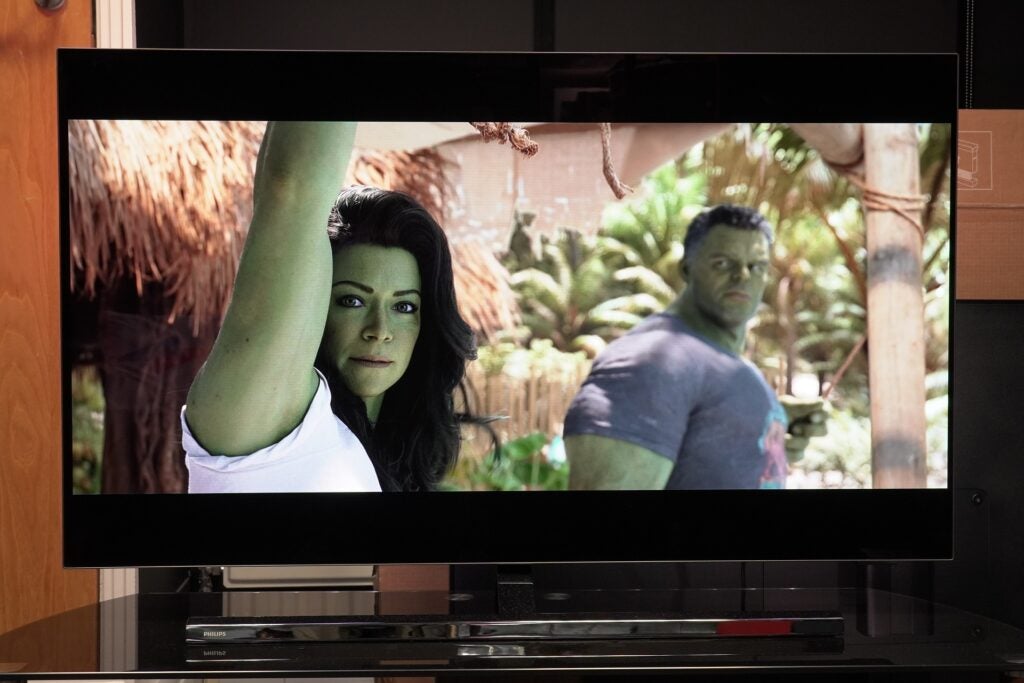
Philips 48OLED807
Best 48-inch OLED TV
Pros
- Sharp, detailed and colourful image
- Better-than-expected sound
- Competitive gaming features
- Stylish design
- Ambilight, of course
Cons
- Not as bright as expected
- LG OLED better overall for gaming
- Remote can be frustrating
The 48OLED807 was the first Philips OLED we’ve tested below 50-inches, and despite its smaller size, it produces a similar performance to the bigger models.
It doesn’t feature the brighter OLED EX panel, but over the course of testing we’d argue that it didn’t really need it. Its peak brightness of 416 nits isn’t as bright as the LG OLED42C2, but OLED’s black levels combined with the Philips P5 processor wrings out plenty of brightness from white tones, creating lovely, deep contrasts.
As usual with Philips’ TVs, the OLED807 is a very sharp and detailed looking image that may to some look a little too artificial, but we found it wrung as much detail and clarity as it possibly could from the TV, making the images from bigger-sized 55-inch Samsung QN90B look soft by comparison.
Its HDR support is wide-ranging from Dolby Vision HDR, to HLG and HDR10+ Adaptive, so whatever content you watch on the TV, the Philips will be able to optimise as well as it can. Philips has added its Dark Detail Optimisation technology to this TV to help reveal more detail in darker parts of the image, but in our opinion this feature did not bring much performance to the table.
The OLED4807 is also a good screen for gaming, boasting Dolby Vision Game mode, AMD/Nvidia VRR solutions and 4K/120Hz support. Unlike LG’s OLED42C2, it doesn’t support some of those features across the entirety of its HDMI inputs, nor is latency as fast at 15.2ms.
The sound quality is better than the LG, delivering a big presentation in the right mode and decent amounts of bass too. We would still add a soundbar to this TV but we wouldn’t be in a rush to do so.
Then there’s Ambilight in its four-sided form helps to reduce eye strain and also provides a fantastic complement to what’s on screen as the LEDs on the rear panel mirror the colours in whatever show or film that’s being watched. This OLED outs in an excellent all-round performance, and if you don’t have space for 55-inch screen, then we’d highly recommend this 48-inch option.
This model has been discontinued with the 48OLED808 available, but if though on paper it’s a brighter performer, in the real world we don’t find it as bright as its predecessor. The 48OLED807 is still available while stocks last, and that’s the small Philips OLED we’d argue you should take a closer look at.
Reviewer: Kob Monney
Full Review: Philips 48OLED807
TCL 65C845K
Best affordable Mini LED TV
Pros
- Incredibly bright for its money
- Impressive contrast for such a bright screen
- Amazingly affordable for so much quality
Cons
- Local dimming system isn’t flawless
- Picture presets need tweaking
- Built-in subwoofer occasionally distorts
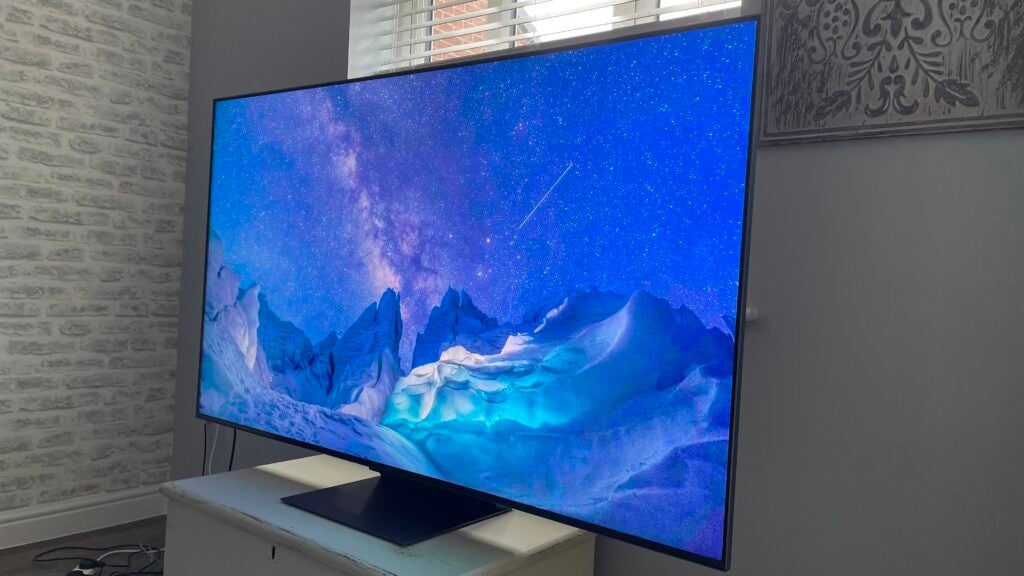
2023 was something of a banner year for TCL as it makes its mark on the TV market with aggressive pricing and feature packed TVs. The C845K is among the most impressive Mini LED TVs we’ve tested, especially for its price.
It’s available for around £1000 for the 65-inch model, which puts it among the Hisense U7K and more affordable than the Samsung QN85C for rivals. While we won’t say this TV is perfect, it’s a better performer than the Hisense model and more cost effective than its Samsung equivalent.
Picture performance is an area that greatly impressed our reviewer. The TCL C845K’s out of box settings require tweaking and for those confident enough to do so, the C845K is capable of excellent contrast thanks to 576 local dimming zones in its Mini LED backlight. This helps to create convincing blacks and spectacular levels of brightness (we measured up to 2200 nits), alongside bold colours. Sony’s XR-65X95L is a much more capable TV in this respect, but it’s also £500 more expensive.
The 65845K’s 70W sound system can pump out a sound that’s loud but retains detail and offers an impressive amount of bass. When pushed to its limits it does sound coarse, with some bass distortion bass, but the speaker’s performance is much better than TVs that cost more than it does.
In terms of features there is HDMI 2.1 support with 4K/120Hz, ALLM and VRR, as well as Dolby Vision Gaming. An input of lag of 15ms is good and can be cut down further with games that support 120Hz frame rates. HDR support includes Dolby Vision, HDR10, HLG, and HDR10+, so the TCL can play nice and optimise colour and brightness with those formats ensuring the best picture quality that the C85K is capable of.
Google TV is a much more attractive and well organised upgrade on its Android TV predecessor, although it doesn’t currently feature support for the UK catch-up apps. Anyone who buys this TV should request a free Roku streaming stick from TCL to get access to the apps.
TCL 55RC630K Roku TV
Best budget TV
Pros
- Quick to assemble
- Excellent smart interface
- Quick input lag for gaming
- Impactful sound system
- Multi-HDR support
Cons
- Limited brightness with HDR
- HDR10+ performance doesn’t have the greatest impact
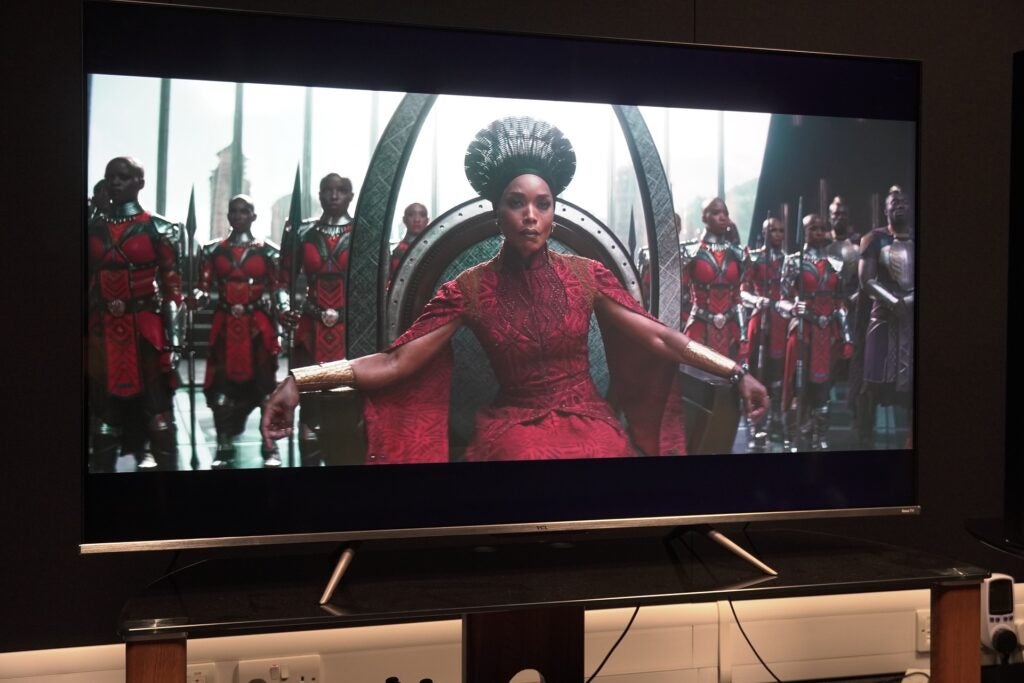
Roku’s smart TVs have enjoyed much success in the US, and for the past few years they’ve been teaming up with manufacturers such as Hisense and TCL to bring some of that magic to the UK. In the TCL 55RC630K Roku TV, they’ve served up their best model to date, winning our best affordable TV award.
This set is only available in the UK, and in our view, it’s good as you can get for a budget TV at its price. The design is sensible and easy to assemble, as well as being tall enough to slip a soundbar beneath its frame should you want to, something that wasn’t as easy to do with the Toshiba UK4D.
The Roku smart interface places an emphasis on simplicity rather than flash, but it works because of its accessibility and the range of features it supports. A wide range of voice assistants are supported, though through an external device and not natively, and there’s AirPlay 2 and Apple HomeKit, which aren’t features often supported by cheaper TVs.
There’s a massive amount of apps with all the big names such as Disney+ and Netflix, along with the UK catch-up apps through Freeview Play. The interface itself is fast to scroll through and easy to navigate, better than the interfaces we used on the Panasonic LX800 and Samsung BU8000. The Roku mobile app is even better, and also features a few more advanced picture settings too.
The TCL 55RC630K isn’t built for high-end gaming with only ALLM supported for putting the TV into its game mode mode. We measured latency at 11.5ms, which is quick for any telly.
Boasting a QLED screen, the TCL 55RC630K puts in a decent HDR performance for its price. We measured peak brightness at 386 nits on a 10% window, which isn’t enough to really give a great sense of what HDR can do, but the QLED screen does present good-looking colours and accomplished looking skin-tones with HDR content.
Contrast isn’t as strong as what you can get if you spend more, but there is support for HDR10+ and Dolby Vision to assist. However, we did find that both HDR formats could benefit from being a little more precision and impact with HDR content. Upscaling is an improvement over the past TCL Roku model with more colour and vibrancy to images, as well as a better sense of sharpness and clarity. The TCL Roku won’t make content look better than it is, but for its price point it’s a competent performance.
The audio system is more than competent. Bass is surprisingly punchy, there’s fine levels of detail and clarity to what we watch, and dialogue is always clear in tone. There’s also a Dialogue Enhancer to help boost what people are saying, and we found it worked effectively.
Reviewer: Kob Monney
Full Review: TCL 55RC630K Roku TV
We also considered…


FAQs
We’d say that currently it is the Panasonic MZ2000, which delivers a colourful and bright picture and marries with it with a very impressive Dolby Atmos sound system for a TV.
If you’re after a TV with the latest features in smarts and gaming, excellent picture and sound, and is slowly coming down in price, then we’d have say the LG C2 remains one of the best TV models to buy in 2024.
The TCL Roku RC630K is one of the best budget sets on the market with its comprehensive set of smart features and very good picture quality.
You might like…


Comparison specifications

Editorial independence
Editorial independence means being able to give an unbiased verdict about a product or company, with the avoidance of conflicts of interest. To ensure this is possible, every member of the editorial staff follows a clear code of conduct.

Professional conduct
We also expect our journalists to follow clear ethical standards in their work. Our staff members must strive for honesty and accuracy in everything they do. We follow the IPSO Editors’ code of practice to underpin these standards.
Editorial independence
Editorial independence means being able to give an unbiased verdict about a product or company, with the avoidance of conflicts of interest. To ensure this is possible, every member of the editorial staff follows a clear code of conduct.
Professional conduct
We also expect our journalists to follow clear ethical standards in their work. Our staff members must strive for honesty and accuracy in everything they do. We follow the IPSO Editors’ code of practice to underpin these standards.