



If you’re tired of untangling the mass of wires accumulating in your bag, wireless headphones are a worthwhile upgrade. They don’t need to cost an arm and a leg, either.
We’ve reviewed a wide range of wireless headphones over the years and compiled the best of the best into this handy list. If you’re searching for a new pair of headphones but don’t know where to start, you’ve come to the right place.
We thoroughly test every pair of wireless headphones that enters our office, examining the design and fit, audio quality, battery life and any additional features. These can include anything from noise cancelling and transparency modes to block out distractions and allow noise in at the press of a button, to voice assistants and companion apps with custom EQ settings.
The headphones we test can vary widely in price too, meaning you don’t necessarily need to spend flagship levels of money to get a great pair of wireless headphones. Whether you’re searching for on-ears, over-ears or true wireless earbuds, stay on this page to find the best wireless headphones to fit your needs and budget.
We’ve split our favourite wireless headphones into categories to help you narrow down your decision. Below you’ll find the best wireless headphones, best wireless on-ears, best wireless earbuds, best Apple over-ears and best noise-cancelling earbuds to name a few of these categories.
Keep reading to discover our best wireless headphones at a glance and scroll further for a summary of each pair, along with pros, cons and links to our full, in-depth reviews.
If you’re looking to delve into something a little more specific, we’ve got you covered too. Head to our other audio best lists for more excellent headphone picks, including the best wireless earbuds, best noise-cancelling headphones, best noise-cancelling earbuds, best running headphones and the overall best headphones.
Best wireless headphones at a glance
- Best wireless headphones: Sony WH-1000XM5 – check price
- Best noise-cancelling earbuds: Bose QuietComfort Earbuds II – check price
- Best wireless earbuds: Sony WF-1000XM5 – check price
- Best premium wireless headphones over £500: Bowers & Wilkins Px8 – check price
- Best premium wireless headphones around £1000: Mark Levinson No5909 – check price
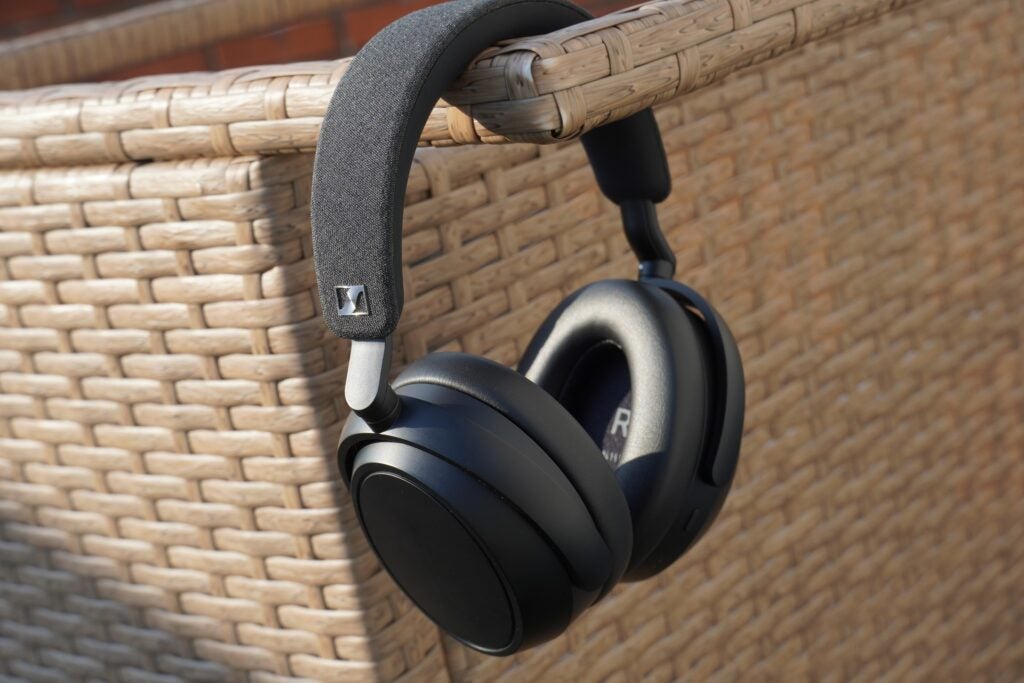
- Best wireless over-ears below £300: Sennheiser Momentum Wireless 4 – check price
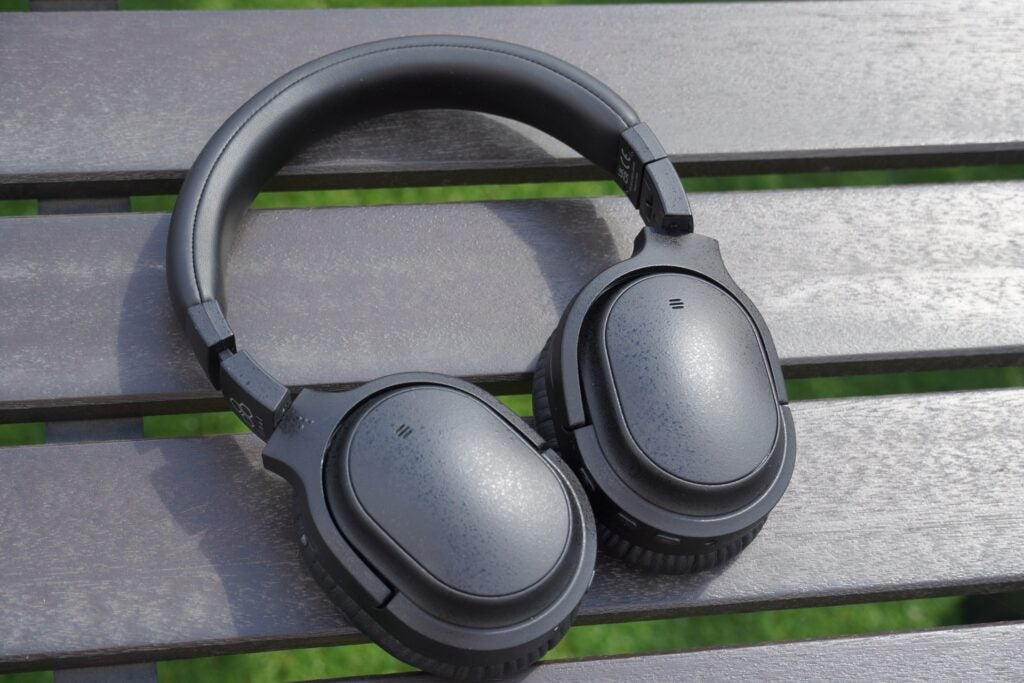
- Best affordable wireless headphones: Final UX3000 – check price
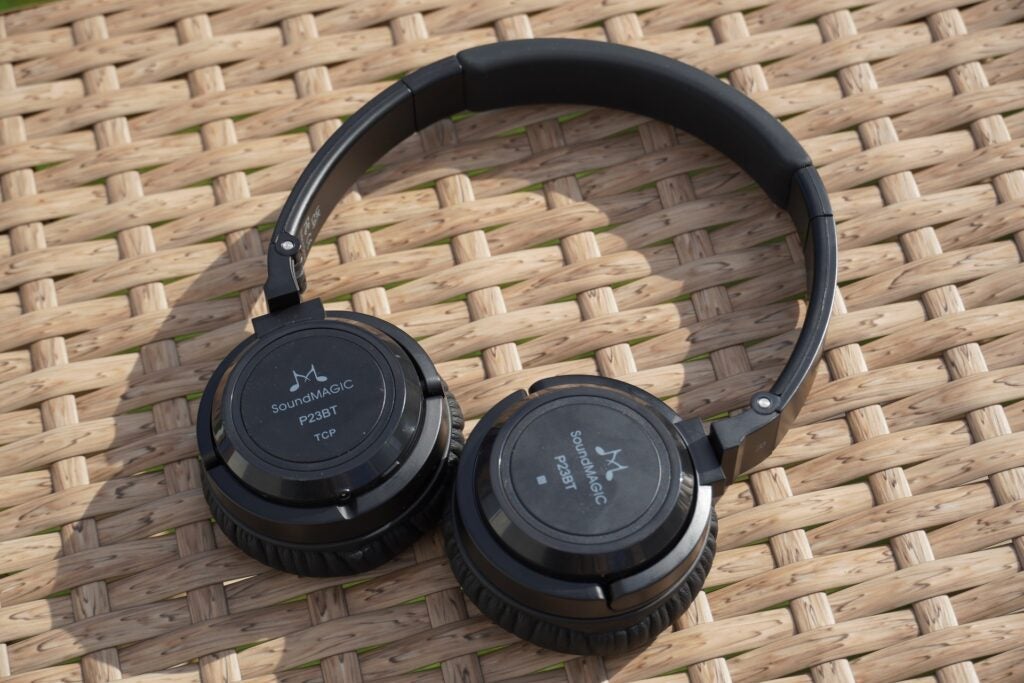
- Best wireless on-ears: SoundMagic P23BT – check price
- Best Apple over-ears: Apple AirPods Max – check price
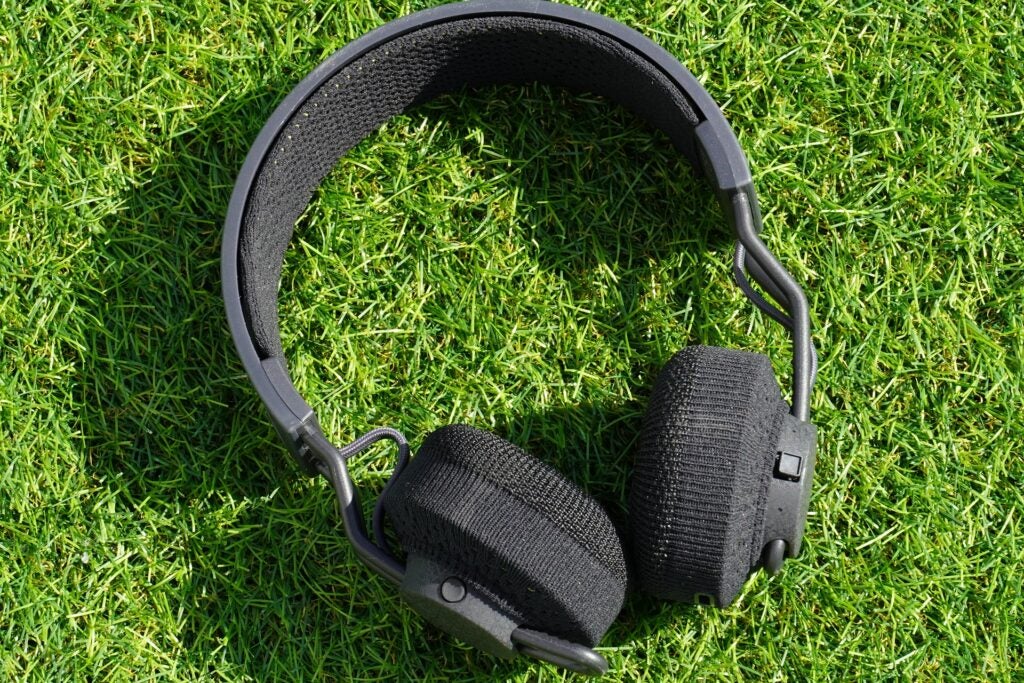
- Best wireless on-ears for sports: Adidas RPT-02 SOL – check price
How we test
Not just anybody can review a pair of headphones. You don’t need superhuman hearing to tell what’s good, but you do need to know what to listen out for.
Our headphone tests are done by some of the best and most prolific reviewers in the industry, with years of experience listening to everything from the plasticky freebie earbuds that come with your smartphone, to five-figure beasts of glass and marble. We love music and we want your tunes to sound good, too.
So we listen every pair of headphones we can get on or in our ears. We use a variety of sources, from basic MP3s playing on a laptop to high-quality tracks on dedicated hi-res audio players.
Our test tracks are wide-ranging to give headphones a thorough challenge. They’re also familiar, so we know every track backwards, and we know which bits might trouble the lesser performers.
We listen again and again, and we do that for weeks in case the sound changes – because it usually does. Then we’ll listen to similarly priced rivals and come up with a verdict that reflects the performance and features for the money.
- Excellent comfort
- Musical, rich audio performance
- Impressively clean and natural noise cancellation
- Superb Ambient Mode
- Great call quality
- Non-foldable design
- Connection gets choppy in busy areas

- Wonderful, versatile sound
- Many clever design elements and strong build quality
- Spatial audio can be immersive for the apps that support it
- Strong connection to the Apple ecosystem
- Lack of ‘off’ button is annoying
- The included case is bad in just about every way
- Heavy and can’t be folded down
- The high price can’t be ignored

- Good comfort
- Effective ANC
- Rich, warm sound
- Solid battery life
- Simple operation
- Stripped-down feature set
- Minimalist looks may be interpreted as bland

- Rigorous yet easy-going sound
- Detail and nuance to spare
- Nice materials, expertly assembled
- Expensive and then some
- Can be bettered for noise-cancellation
- Abbreviated control app

- Impressively rich sound
- Excellent noise cancellation
- Compact design
- IPX4 rating
- Comprehensive feature set
- Beaten by Bose for noise cancellation
- More expensive than before
- Call quality suffers in noisy areas

- Refined and detailed sound
- Compact and lightweight design
- Long battery life
- Cheap
- Can pinch on the ears
- Not what you’d call stylish

- Great comfort
- Clear, precise, balanced audio
- Very good noise cancellation
- Massive battery life
- Excellent wireless performance
- Lacks the style of older models
- Not the best noise cancellation at this price
- Bass is a little reserved in tone
- Rich, energetic audio
- Long, long battery life
- Eco-conscious and durable design with washable elements
- Original model offers a better-balanced sound
- Fairly expensive for workout headphones
- Some may find on-ear design uncomfortable
- Improves on the PX7’s audio quality
- Confident noise cancellation
- Graceful looks
- Tremendous wireless performance
- Very good call quality
- Expensive
- More natural-sounding and dynamic headphones from Focal and DALI
- Top-tier noise cancelling and ambient modes
- Improved sound over the original
- Slimline design
- AptX support on the way
- Improved battery capacity
- More expensive than before
- Average call quality
- Still susceptible to wind noise
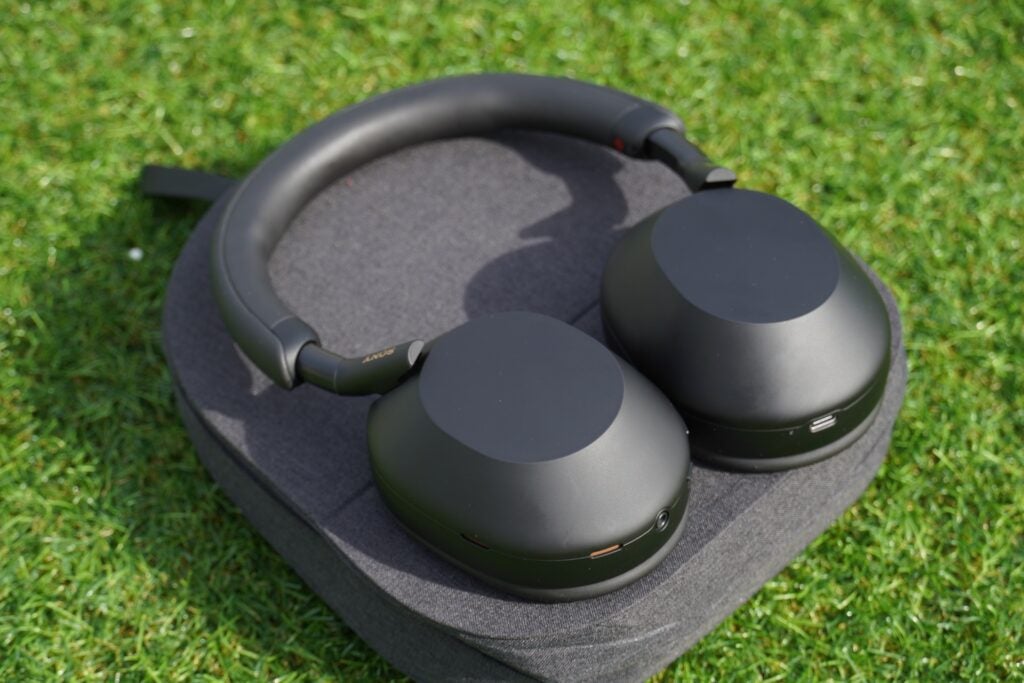
Sony WH-1000XM5
Best wireless headphones

Pros
- Excellent comfort
- Musical, rich audio performance
- Impressively clean and natural noise cancellation
- Superb Ambient Mode
- Great call quality
Cons
- Non-foldable design
- Connection gets choppy in busy areas
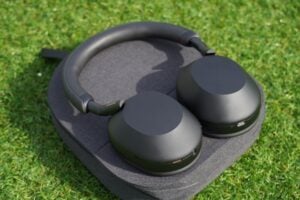
The WH-1000XM5 are Sony’s latest and greatest version of their lauded WH-series of wireless headphones, and they are our favourite wireless headphones at this moment in time.
An the audio front the improvements are incremental, refining what was already an excellent sound from the WH-1000XM4 with more texture to bass, a richer midrange performance, and a soundstage that’s spacious with tighter definition of instruments. Their approach to sound makes them a great listen with virtually any genre.
In terms of features, Speak To Chat (which pauses music when you’re speaking) and Quick Attention (which filters through outside sound) return, with battery life matching the previous model at 30 hours. During testing, we managed to get around a week’s use with ANC so there’s enough charge to last a while.
The ANC is even better than it was on the WH-1000XM4, tackling higher frequency sounds with more confidence. Everything from voices to using transport and big crowds were all suitably silenced; though we’d wager the XM4 model is slightly better at reducing the impact of people talking. Within Sony’s Headphone app there are 20 levels of noise cancellation to choose from, with Ambient Mode featuring a noticeable improvement over the older model with a clearer, natural sound that felt as if you weren’t wearing headphones at all.
It’s on the design front where there have been the most noticeable changes with the XM5s have occurred. They have a more modern and urbane look, redesigned earcups in a more oval shape that we found took a little while to get use to, and, somewhat controversially, the XM5s no longer fold flat. It’s been done in the name of better ANC performance, mimicking the Bose Noise Cancelling Headphones 700 and the AirPods Max, and it does reduce wind noise for a more satisfying ANC performance.
Reviewer: Kob Monney
Full Review: Sony WH-1000XM5
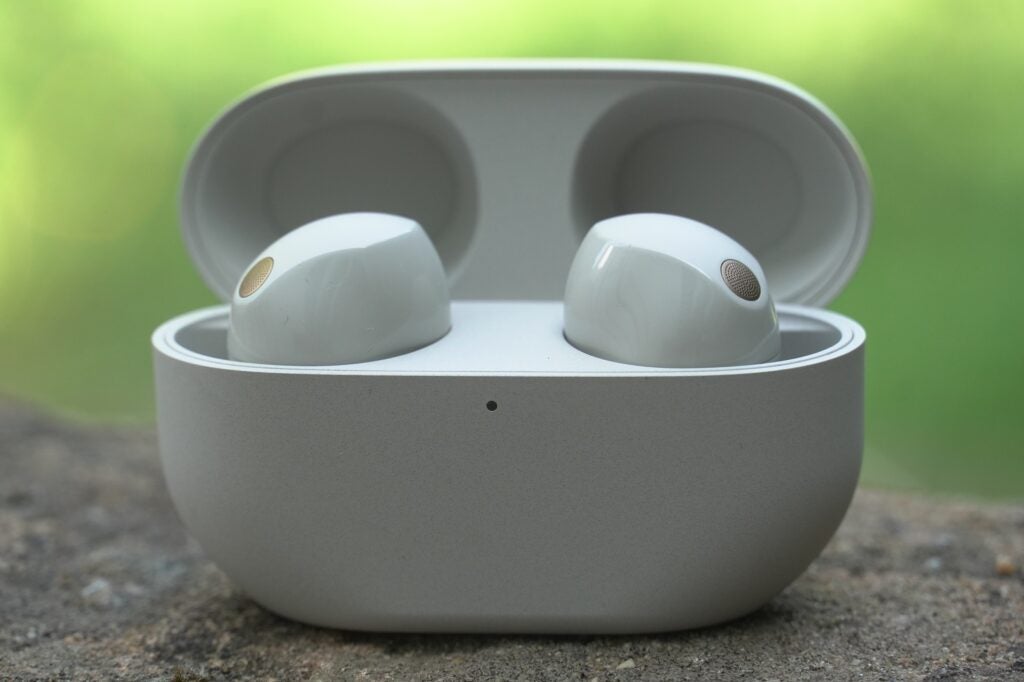
Sony WF-1000XM5
Best true wireless headphones
Pros
- Smaller, lighter design
- Powerful noise-cancellation
- More detailed, balanced audio performance
- Plenty of smart, convenient features
Cons
- Bose a smidge better for ANC
- Slightly odd call performance
Sony’s WF-1000XM5 knocks the previous holder of best true wireless (the WF-1000XM4), with a terrific, across the board performance.
The audio performance is an improvement on its predecessor in terms of detail and sharpness, the new Dynamic Driver X ushers in a more balanced performance across the frequency range. Low end depth does take a hit, but to our ears the WF-1000XM5 sound more detailed and clearer with its bass performance even though it loses a sense of fun.. The midrange is also better, much better at showcasing fine detail in music, while there have been gains with the high frequencies, which are sharper, clearer and more detailed.
Elsewhere, noise-cancelling performance is better, able to suppress voices and environmental noise better than than before, though the QuietComfort Earbuds II suppress sounds slightly better noise-cancelling performance, though in the Sony’s favour is that it cancels noises with a more natural tone. The transparency mode is clear and detailed, although the WF-1000XM4 sounds slightly clearer and more open to our ears.
Battery life is the same with 8 hours per earbuds and 24 in total with the charging case. Wireless performance is good in both AAC and LDAC playback modes, though it is less prone to stutter when streaming audio in AAC. There are too many features to list in this paragraph, but in terms of customisation, breadth, and convenience, no other true wireless is as comprehensive as the WF-1000XM5 in our mind.
Call quality is decent but has a tendency to leak in background noise whenever we spoke. We wouldn’t rate as being as good as the AirPods Pro 2 for call performance.
Finally, the design is smaller and lighter for a more favourable and comfortable fit, something that users felt was an issue with the XM4 model. The introduction of an extra small ear-tip size means more room to fit a wider range of ears.
Though it’s not perfect, and there are still areas where its rivals have a leg-up on them, in terms of overall performance, the Sony WF-1000XM5 still rank as our favourite true wireless.
Reviewer: Kob Monney
Full Review: Sony WF-1000XM5
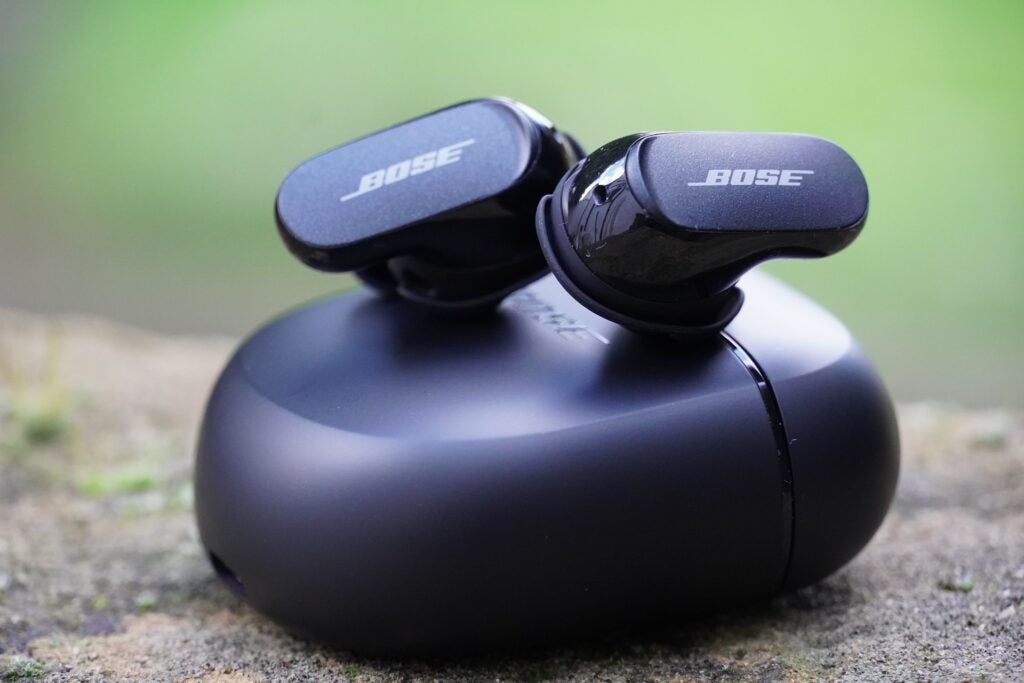
Bose QuietComfort Earbuds II
Best noise-cancelling true wireless
Pros
- Top-tier noise cancelling and ambient modes
- Improved sound over the original
- Slimline design
- AptX support on the way
- Improved battery capacity
Cons
- More expensive than before
- Average call quality
- Still susceptible to wind noise
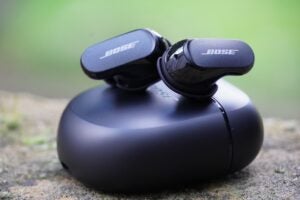
When it comes to noise-cancelling earphones, there aren’t any better in our opinion than the QuietComfort Earbuds II.
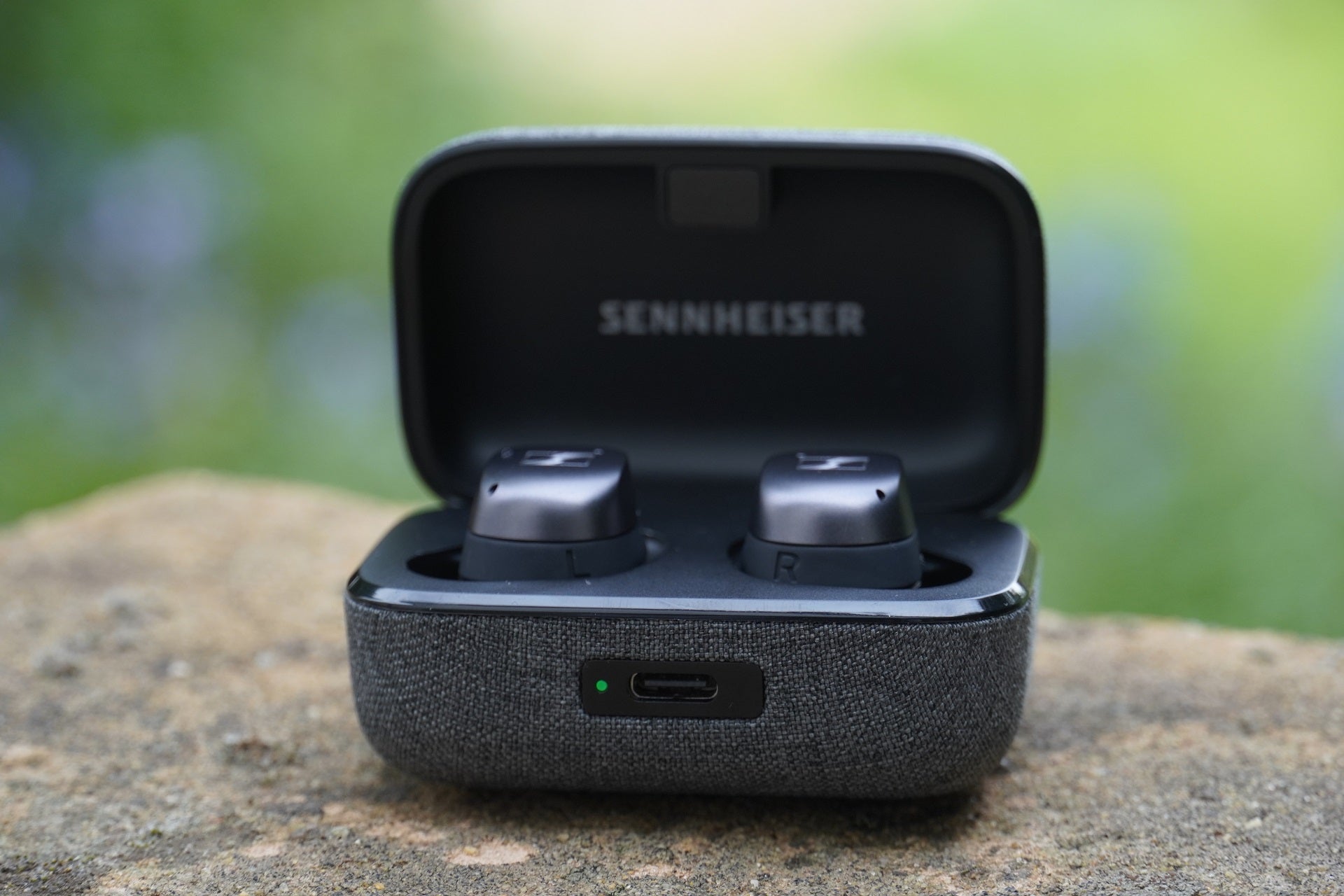
It’s the finest noise-cancellation we’ve tested in a true wireless. It removes more sounds than its nearest challengers in the Sony WF-1000XM5 and Sennheiser Momentum True Wireless 3. And while it doesn’t remove every sound, most ambient sounds, traffic and voices are curbed by the powerful noise-cancellation of these earbuds. When we took them out of our ears, we always surprised by how loud the outside world was.
The Aware mode is similarly excellent, producing a clear, detailed, and natural performance. The QuietComfort Earbuds II support Bose’s ActiveSense technology which works to automatically reduce loud background noises. We found it worked very well during a conversation with another person when we used them on the London Underground, quickly dulling loud noises such as that of the train doors opening.
The design has changed over the original QuietComfort Earbuds. They’re not as chunky (but still fairly big) and they’ve ditched the Stay Hear tips for a shape that fits into the ear better. We’ve found them comfortable to wear over long periods, though despite the change in the design we can hear some wind noise with ANC on.
Bose has never been big on features, preferring to keep the experience simple but within the Bose Music app there is a three-band EQ to customise the buds’ sound. You can also customise the noise-cancellation with different profiles that can be toggled on and off through the controls.
We found the wireless performance to be uniformly excellent wherever the headphones were used. The one aspect of its performance that disappointed was the call quality performance. Vocal clarity is good, but the earphones let in too much noise. Battery life is at the same level as the WF-1000XM5 with 24 hours available.
The audio performance is better than the original, with the top end of the frequency range brighter along with bigger, punchier bass. The midrange carries more weight, with a better sense of depth and width than the original.
There is a new model in the QuietComfort Ultra Earbuds that are more expensive but do boast higher quality Bluetooth codecs and immersive audio support. We’ll be looking to review those earbuds soon.
Reviewer: Kob Monney
Full Review: Bose QuietComfort Earbuds II
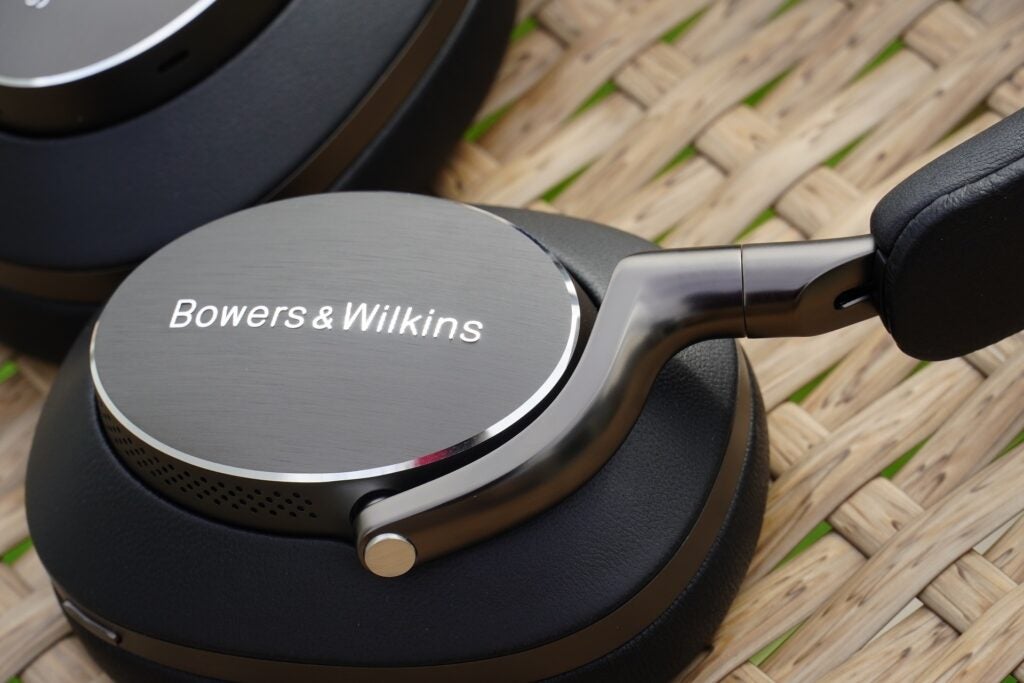
Bowers and Wilkins Px8
Best premium wireless headphones over £500
Pros
- Improves on the PX7’s audio quality
- Confident noise cancellation
- Graceful looks
- Tremendous wireless performance
- Very good call quality
Cons
- Expensive
- More natural-sounding and dynamic headphones from Focal and DALI
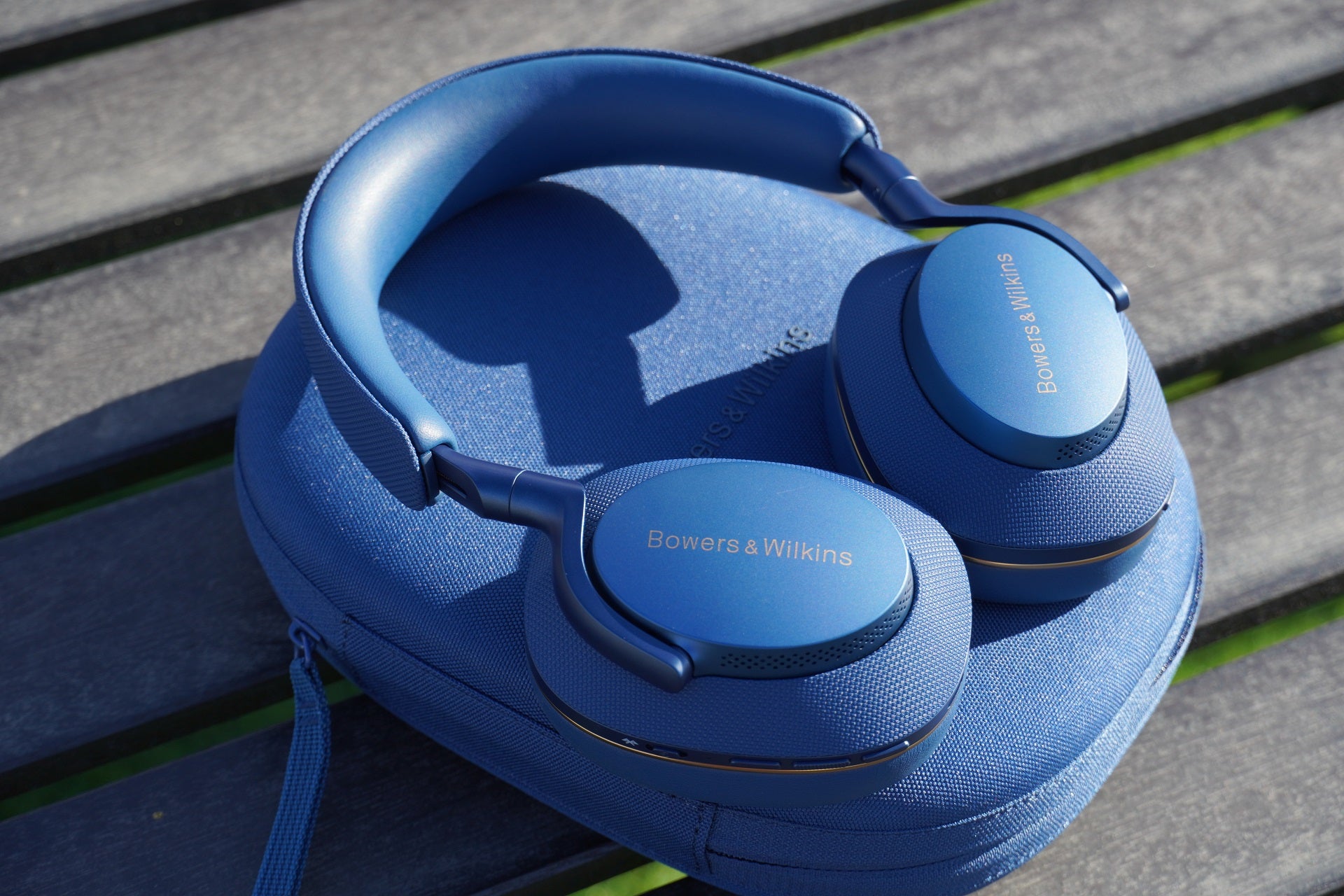
There’s a growing selection of headphones that offer a premium performance for a premium price, and if your budget allows you to go around the £500 mark, the Bowers & Wilkins Px8 is an excellent choice at £599 / $699.
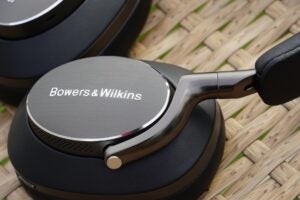
The Px8 exude class in terms of the appearance with the Black and Tan leather versions. The build quality is excellent, and we found they were comfortable to wear over long periods of time.
They support adaptive ANC and while the performance not as strong as the Sony WH-1000XM5 or Bose QuietComfort 45, they’re effective at suppressing noise on the Underground, as well as hushing voices and managing wind noise when you’re above ground. We found it to be a strong enough ANC performance to usher in a sense of calm wherever you are.
Call quality is among the best we’ve heard from any headphones recently. Voices coming across clearly and background noises are kept to a minimum. The wireless connection is another aspect of these headphones performance that is superb with barely any dips in the signal, and the battery is respectable at thirty hours, although the likes of the Sennheiser Momentum Wireless 4 can offer more.
With angled 40mm dynamic full-range drivers, the Px8 offers a large and expansive soundstage, taking a neutral approach to the frequency range, giving low frequencies good definition and punch, with a sharp and clear midrange and the high frequencies are distinctive and bright. If you want high fidelity sound in a great looking package, look no further than the Bowers & Wilkins Px8.
Reviewer: Kob Monney
Full Review: Bowers & Wilkins Px8

Mark Levinson No. 5909
Best premium wireless headphones up to £1000

Pros
- Rigorous yet easy-going sound
- Detail and nuance to spare
- Nice materials, expertly assembled
Cons
- Expensive and then some
- Can be bettered for noise-cancellation
- Abbreviated control app
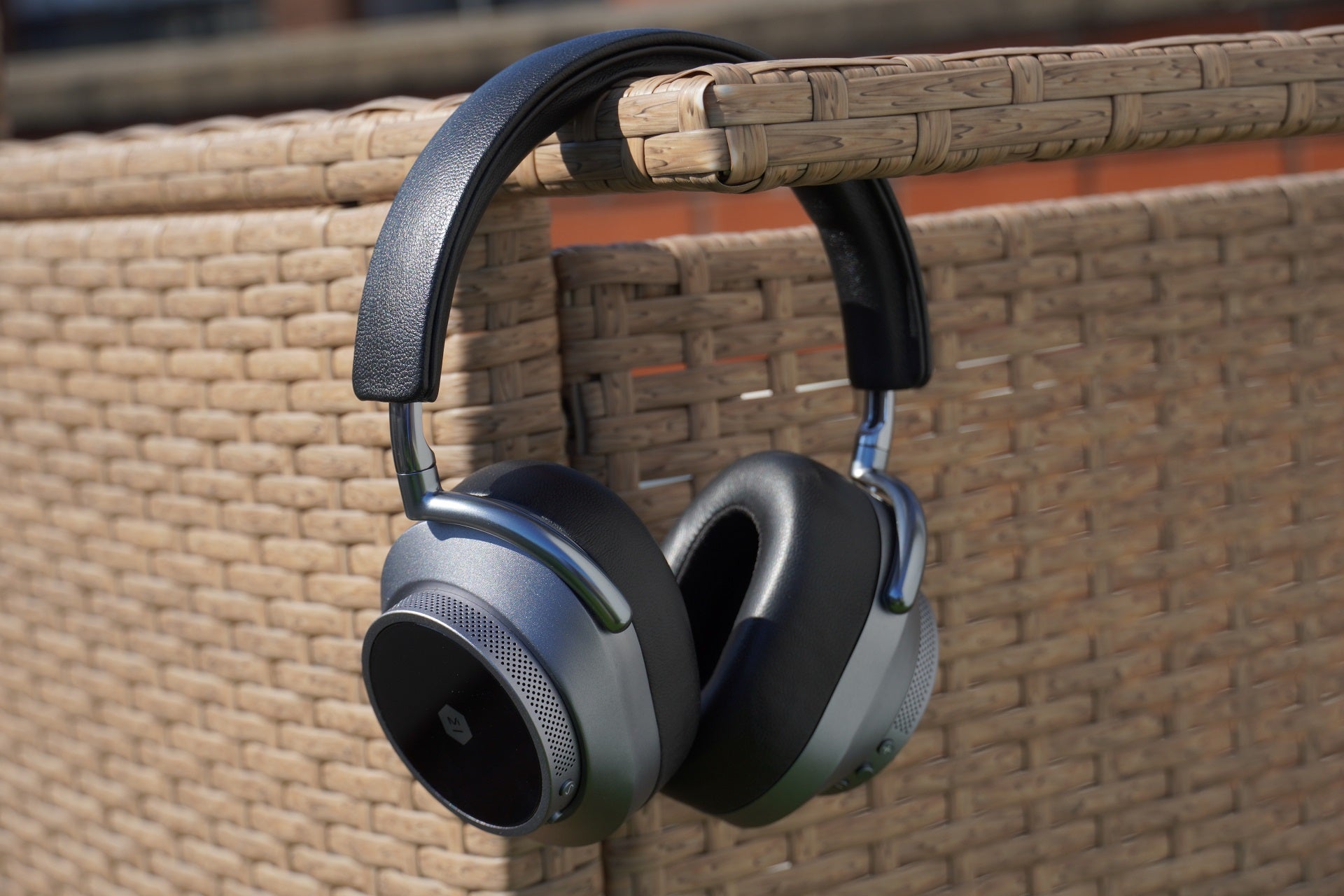
The Mark Levinson No. 5909 hit the definition of a premium pair of headphones with their $999 / £999 price tag. That will buy you almost four pairs of Sony’s WH-1000XM4 over-ears.
They feel like a properly premium product with their anodized aluminium composition and supremely comfortable memory foam padding that allowed us to wear them for hours on end. From that perspective the build quality of the No. 5909s feel their asking price.
It’s on the front of audio where the No. 5909s where our reviewer found they offered began remarkable levels of detail, alongside a low end with plenty of extension. It’s in the midrange where these cans shined during testing, bringing crispness and clarity to vintage songs for an expressive sound; the soundstage is reasonably expansive with plenty of space for instruments to reside within in it.
In terms of their feature set, there’s not a huge amount of features compared to the WH-1000XM5, especially for the price tag. There’s a comprehensive set of Bluetooth codecs supported with SBC, AAC, LDAC and aptX Adaptive that opens the headphones to accepting higher quality tracks from the likes of Tidal and Qobuz. The battery life is strong, with 30 hours with ANC enabled and up to 34 with it off for a few days’ worth of charge. The ANC here won’t cancel every unwanted noise but deals with a good proportion well, although you can get better for much less.
Reviewer: Simon Lucas
Full Review: Mark Levinson No. 5909
Sennheiser Momentum 4 Wireless
Best wireless over-ears for battery life
Pros
- Great comfort
- Clear, precise, balanced audio
- Very good noise cancellation
- Massive battery life
- Excellent wireless performance
Cons
- Lacks the style of older models
- Not the best noise cancellation at this price
- Bass is a little reserved in tone
While the Sennheiser Momentum 4 Wireless didn’t manage to defeat the Sony WH-1000XM5, they have a lot to commend them, especially if you’re after a pair of headphones around the £300 mark
The Momentum 4 Wireless aren’t as flashy as the previous model, losing a sense of style and attractiveness in the process. However, we didn’t mind that change as there were gains in ergonomic terms with the headphones very comfortable to wear with no annoying obstructions and bulky earcups to deal with. They cannot be collapsed to be more compact, following the trend set by the likes of the Bose Noise Cancelling Headphones 700 and AirPods Max by opting for a simpler design that reduces wind noise.
The noise cancellation is very good, though not quite as good as the Sony or Bose QuietComfort 45 are. They deal with crowd noises very well and hush voices with confidence but both the Sony and Bose eke out a more comprehensive noise cancelling performance. The Transparency mode is one we felt was very clear and detailed, sounding natural in tone when piping the outside world to our ears.
The battery life is a phenomenal 60 hours, it took a week of using the headphones heavily to get them down from 40% to zero. It could take a few weeks to use up all the battery, which means fewer charges over the course of the headphones’ lifetime. The wireless performance has been very good, with only one moment of instability during our week of using the headphones that caused us any worries.
The sound quality is not as energetic as the Momentum Wireless 3, taking a more refined and balanced approach to music. There is less emphasis to bass frequencies than we remember, but the soundstage is bigger in scope than it is on the Sony, filled with detail with instruments and vocals conveyed with lots of clarity. They aren’t quite as dynamic in sound as the Sony, losing a couple of points in terms of energy and vibrancy but their more neutral approach does aid them in producing a consistent performance across a range of music genres.
The Sennheisers are good all-rounders, perhaps not the best in any category, but among their close price rivals below the £300 mark, they are the best headphones we’ve come across.
Reviewer: Kob Monney
Full Review: Sennheiser Momentum 4 Wireless
Final UX3000
Best affordable wireless headphones
Pros
- Good comfort
- Effective ANC
- Rich, warm sound
- Solid battery life
- Simple operation
Cons
- Stripped-down feature set
- Minimalist looks may be interpreted as bland
Recent years have seen wireless noise cancellers tumble in price to the point where you don’t need to spend a few hundred to get a good performance, as the Final UX3000 demonstrate.
In our view they offer some of the best audio in their sub-£150 price tag, delivering an audio performance that bettered the more expensive Ausounds AU-XT ANC, with plenty of richness, weighty bass and bright highs, as well as describing instruments naturally described instruments. They lack a certain crispness, which in this case means they’d don’t dig up as much detail as the Cleer Enduro ANC, but they’re a more musical-sounding performer, with a wide soundstage and an enjoyable sense of depth within the stereo image.
The UX3000s keep things simple on the feature with no app support or transparency mode. The ANC is pretty solid for the price, good at getting rid of most ambient noise, with loud crowds and vehicles making less of an impression. It won’t match the ANC levels of the Sony WH-1000XM5, but for most it’s more than serviceable for commutes and walking about cities. Battery life also proved to be more than good enough with 25 hours with ANC on, and up to 35 hours without it, as we rarely felt the need to charge them often during testing. There’s no support for fast charging, so filling up the battery did feel as if it took longer than usual.
That simplicity also extends to the UX3000’s design, with comfortable fit and a minimalistic aesthetic. The finish is what Final refers to as ‘Shibo’, which brings with some distinctive wrinkles and can help to repel dirt and dust. Controls here are taken care of by a few physical buttons for playback, volume and the ANC, adding to the overall simplicity and accessibility of the headphones.
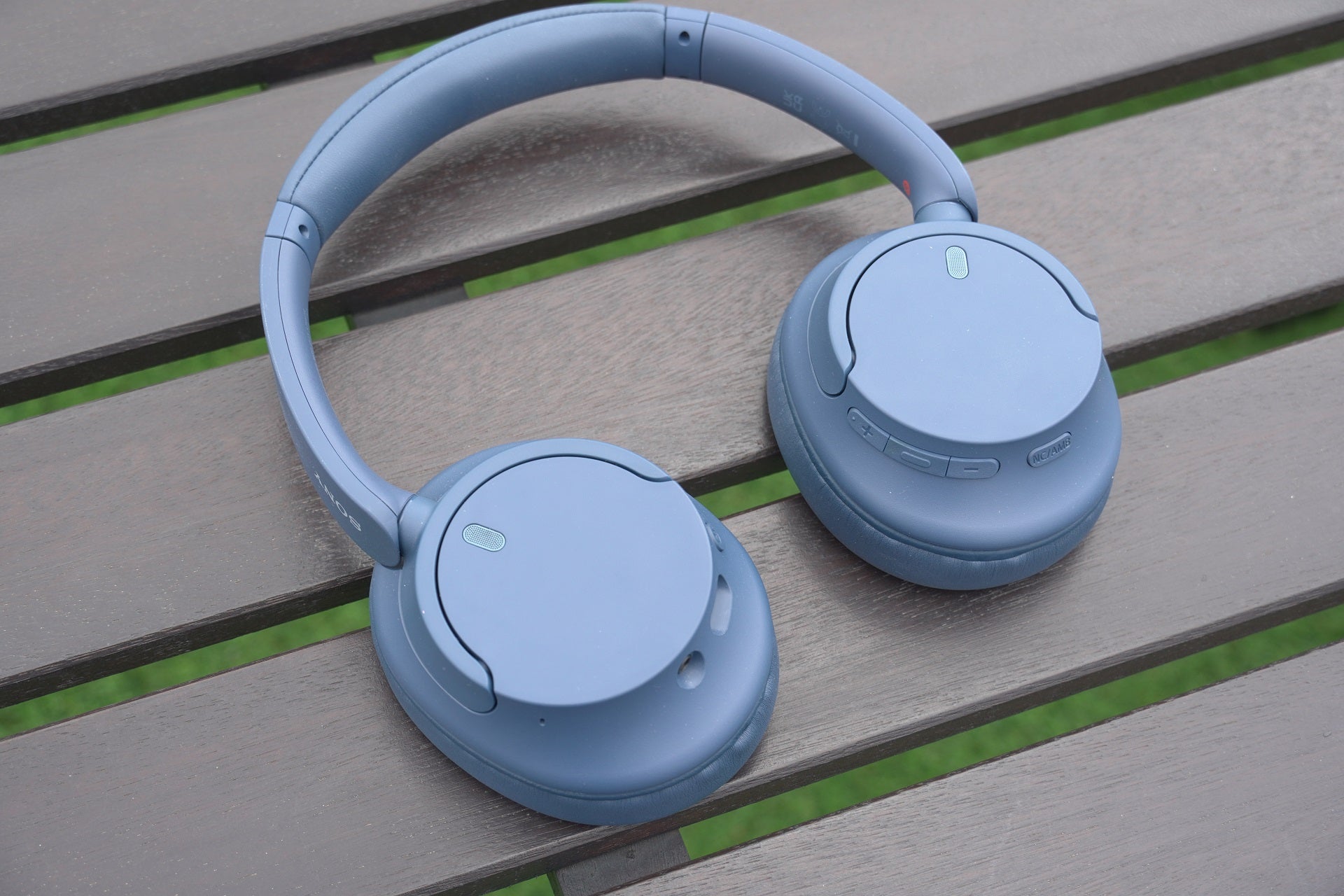
There’s competition from the likes of Sony WH-CH720N which are priced even cheaper and come laden with more features such as Bluetooth Multipoint and adjustable noise-cancellation. The Sony pair are worth considering if you after more smarts than the Final can provide.
Reviewer: Kob Monney
Full Review: Final UX3000
SoundMagic P23BT
Best on-ear wireless headphones
Pros
- Refined and detailed sound
- Compact and lightweight design
- Long battery life
- Cheap
Cons
- Can pinch on the ears
- Not what you’d call stylish
It’s been a while since we last heard from budget headphone specialists, SoundMagic, but we shouldn’t have worried as the P23BT are another pair of excellent value headphones from the company.
As usual, they’re affordable at just £49.99 and while they’re not big on features, SoundMagic has made some sensible choices as these headphones offer good level of convenience, too.
There’s no escaping the on-ear design, which may work better for some than it does for others. Issues include pinching around the ear and leaking noise for the outside world that could interrupt your music listening session. If you’re not too bothered by the latter, some may even prefer to be aware of what’s around them, and you’re not affected by the former issue, then the SoundMagic can be comfortable enough to wear thanks to their soft-padded earcups.
They integrate touch controls, which work surprisingly well in terms of how responsive they are, and their compact, lightweight and foldable design make them, in our opinion, easy to wear and even easier to store when not in use.
You won’t find features such as noise cancellation or transparency mode here. You get a battery life that’s estimated to be around 54-60 hours, which is nearly double that of the Status BT One on-ears, but lags behind the Marshall Major IV, which have 80+ hours in reserve. They also pack aptX-HD Bluetooth, which allows for Hi-res music playback from the likes of Tidal and Deezer music streaming services.
The sound quality is far more balanced and mature than we expected for the price, our reviewer found the headphones offered a subtle, well-balanced listen with its detailed midrange performance, sharp high frequency playback and bass that features a decent amount of depth. If you do prefer a bassier sound to your headphones, you may want to give the Marshall Major IV a try as an alternative.
Reviewer: Kob Monney
Full Review: SoundMagic P23BT

AirPods Max
Best Apple over-ear wireless headphones

Pros
- Wonderful, versatile sound
- Many clever design elements and strong build quality
- Spatial audio can be immersive for the apps that support it
- Strong connection to the Apple ecosystem
Cons
- Lack of ‘off’ button is annoying
- The included case is bad in just about every way
- Heavy and can’t be folded down
- The high price can’t be ignored
The Apple AirPods Max represents the best wireless over-ears available if you have an iPhone, MacBook or iPad.
Their design is typically Apple with a modern aesthetic that’s unlike any other pair of headphones we’ve tested. They borrow cues from both the Apple Watch and HomePod Mini to create a set of cans that look and feel excellent, with smooth rounded metal earcups and a mesh headband with memory foam earcups that made them immensely comfortable. At 385g, they are quite heavy, and there’s no IP rating for use in the rain or exercising, if that’s of interest. The case isn’t the most thoughtful, as it offers zero protection, and causes irritation as it’s the only way for the AirPods Max to turn off.
The feature set here is great for Apple users. For instance, Spatial Audio offers a more immersive and 3D-like sound profile that’s only available on iOS devices, and while the feature is clever, it’s availability is limited to several apps such as Apple TV+, Netflix and Disney+.
During testing, we found the noise cancellation to be very good, similar in performance to the Sony WH-1000XM4 and marginally better than the Bose Noise Cancelling Headphones 700, with its transparency mode that sounded perfectly natural. We also found the battery life to match Apple’s claimed 20 hours, and while it’s less than what the competition can offers, it’ll be more than enough for long haul flights or a few days of use.
The AirPods Max’s sound takes a balanced approach. It features plenty of bass and low end rumble, alongside clean vocals and sparkly highs that don’t sound harsh. The balanced profile lent itself to the fact Apple’s premium over-ear contenders worked well with a variety of music, and the presence of Spatial Audio is useful within Apple Music with a well-mastered track. These headphones don’t support Hi-Res Audio, which is disappointing for the price, but if you’re within the Apple ecosystem, these over-ears are you best bet for an excellent experience.
Reviewer: Max Parker
Full Review: Apple AirPods Max
Adidas RPT-02 SOL
Best wireless on-ears for sport
Pros
- Rich, energetic audio
- Long, long battery life
- Eco-conscious and durable design with washable elements
Cons
- Original model offers a better-balanced sound
- Fairly expensive for workout headphones
- Some may find on-ear design uncomfortable
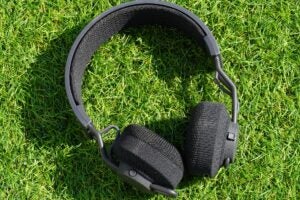
The RPT-02 SOL are headphones that feature a solar charging panel in its headband, absorbing sun and ambient light to give it a battery boost when used for workouts and running.
They’re not the first headphones to feature the technology given the Urbanista Los Angeles and Phoenix beat them to it, but these headphones are tailored for sports and workouts, and not just for casual use.
Battery life is around 80 hours when they’re not being charged, and while we found that the solar panel didn’t top up battery levels but did do enough to reduce battery discharge. When used over the course of six weeks in a gym and for runs, the percentage drop in battery was only 8%.
For a pair of on-ears they’re comfortable enough to wear, we only felt they started to pinch on the ears deep into sessions, and this sense of discomfort could be reduced by repositioning the headphones. They’re also stable when worn, not shifting about during runs and lightweight at 256g. Like the original RPT-01 the incorporate machine washable fabrics and use of recycled plastic for the design, and with an IPX4 rating, they can dispel splashes of water and sweat.
In terms of how they sound, we felt they offered a richer, bassier performance than the RPT-01, which is much clearer and crisper in its tone. It describes tracks with more energy, but misses out on the subtle details the original pair draws out from the music we listened to. For workouts, these are fun, energetic-sounding pair of headphones .
Reviewer: Kob Monney
Full Review: Adidas RPT-02 SOL
We also considered…
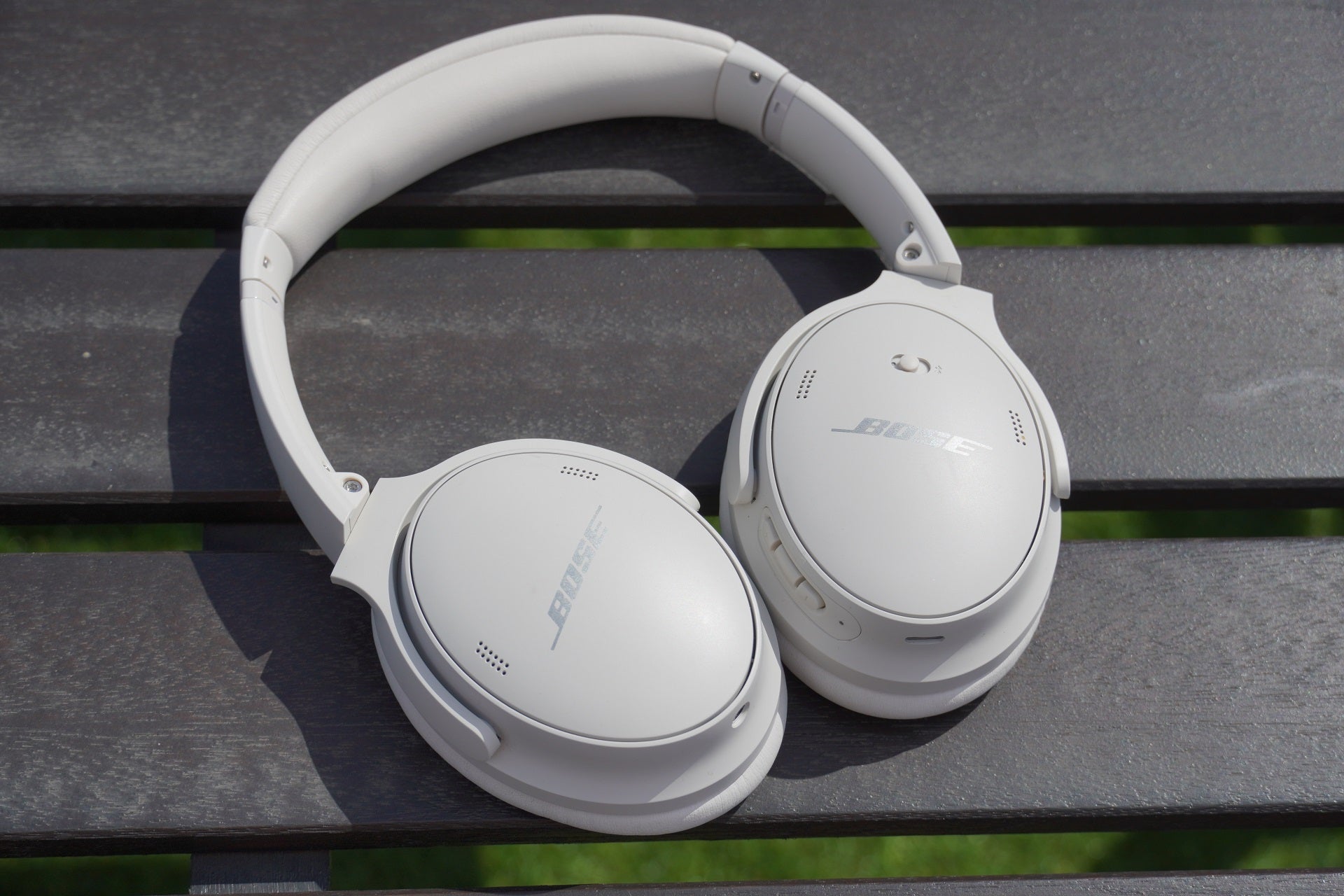
We’ve reviewed
See all reviewsFAQs
Our nomination for the best wireless headphones would be the Sony WH-1000XM5. They sound great, feature excellent noise cancellation and come with useful and convenient smarts such as the Speak to Chat function that pauses music when the wearer starts talking.
We’d recommend the Final UX3000, which offer good noise cancellation and rich and vibrant audio for less than £150. They’re well suited to being used on the commute.
You might like…


You might like…

Editorial independence
Editorial independence means being able to give an unbiased verdict about a product or company, with the avoidance of conflicts of interest. To ensure this is possible, every member of the editorial staff follows a clear code of conduct.

Professional conduct
We also expect our journalists to follow clear ethical standards in their work. Our staff members must strive for honesty and accuracy in everything they do. We follow the IPSO Editors’ code of practice to underpin these standards.
Editorial independence
Editorial independence means being able to give an unbiased verdict about a product or company, with the avoidance of conflicts of interest. To ensure this is possible, every member of the editorial staff follows a clear code of conduct.
Professional conduct
We also expect our journalists to follow clear ethical standards in their work. Our staff members must strive for honesty and accuracy in everything they do. We follow the IPSO Editors’ code of practice to underpin these standards.