
Sections
- Page 1 HTC One Review
- Page 2 Android 4.3, Sense 5 and BlinkFeed Review
- Page 3 Sense TV, Browsing, Keyboard and Audio Review
- Page 4 Internal Speakers, Camera and Zoe Review
- Page 5 Call Quality, Battery Life and Verdict Review
Verdict


Pros
- Excellent build and ergonomics
- Fab screen
- Sense 5 is visually slick
- Great performance
Cons
- Non-expandable memory
- Mediocre battery life
- Keyboard needs a visual refresh
Key Specifications
- Review Price: £549.99
- 1080 x 1920 pixel, 4.7in display
- 4MP camera with OIS and Ultrapixel
- 9mm thick aluminium chassis
- 1.7GHz quad core processor
- 2300mAh battery
- Android 4.1 with HTC Sense 5
HTC One long-term test
Read the review of the HTC One M8
The HTC One has now been out for a year. Since we originally reviewed the phone, it has been crowned our phone of the year 2013, beating the Google Nexus 5, iPhone 5S and Samsung Galaxy S4.
As you might have guessed – we still like it. In fact we still think the HTC One is one of the best mobile phones on the market even though it’s not quite as fast as some of the newer competitors.
However, it now has a rival from its own family. The HTC One M8 has launched and it’s a very good phone indeed. It offers an improved camera, a tweaked design and a slightly larger screen.
Since our original review, a few different versions of the HTC One phone have been released, other than the standard silver type we initially looked at. The Google Play HTC One edition has vanilla Android rather than the HTC Sense software used in the original. However, it is not available in the UK – a real shame.
A few new colours have also been outed, and these are a bit easier to get hold of here. There’s a deep red, a striking blue, a gold shade and a near-black dark grey.
Here are a few pictures to see how they compare to the version seen in the review below.
Related: HTC 10 review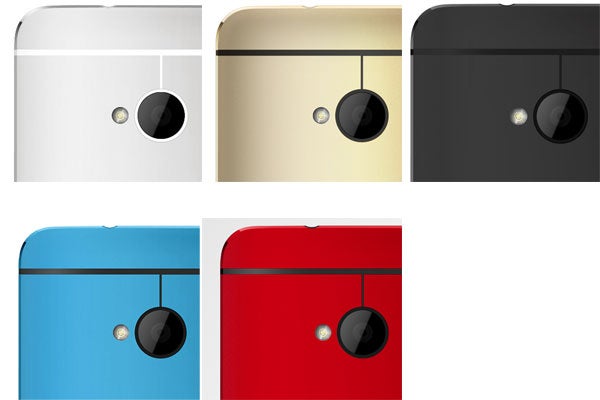
HTC One: What has changed?
In the year since the HTC One’s launch we’ve seen its processor go from cutting edge to being a slight ‘has been’. The Snapdragon 600 processor of the phone is no longer used in new mobiles, discarded in favour of the Snapdragon 800, which allows for faster clock speeds and has an updated graphics processor.
However, it’s not something we notice much in actual use. The HTC One can play pretty much every game the newer top-end phones can handle (that we’ve tried) and sequential updates have only improved the performance of the phone.
The phone’s superlative features remain top of their game too. The HTC One is still the phone that feels best in-hand out of all the top-end Androids, and it has better internal speakers than any of its big-name rivals.
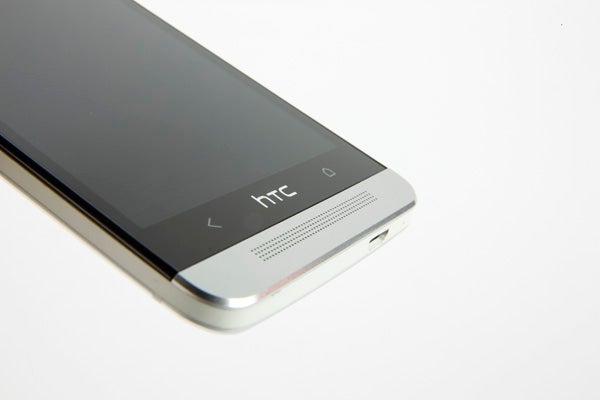 HTC One – never been topped
What is also interesting – and a bit sad – is that HTC has not quite managed to recreate the spark of genius that resulted in the HTC One in its subsequent phones. There have been two other One-series phones in the range, the HTC One Mini and the HTC One Max, but neither has been quite as good. Unlike the Sony Xperia Z1 Compact and Xperia Z Ultra it’s not quite a case of a bigger and smaller version of the HTC One.
Part of this is down to the way the phones are made. The HTC One has an aluminium frame with plastic inlays, but the Mini and Max look and feel more like plastic phones with some aluminium plates grafted onto them. They are not as classy or immaculate as the phone that inspired them, the HTC One. The One Max in particular looks like a bit of a mess next to it.
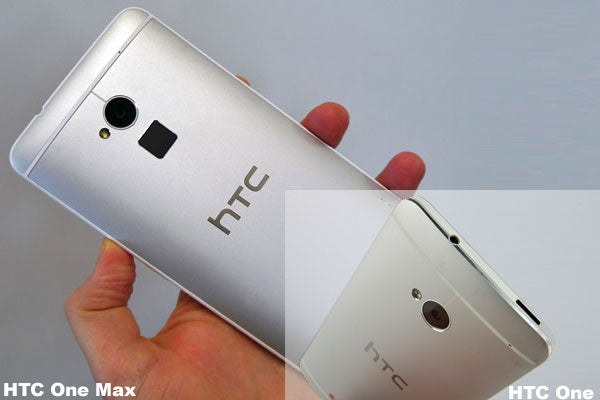
The HTC One is much better-looking than the One Max
HTC One Software
Since the HTC One’s launch there have been a few little software changes too. First of all, the Deals app no longer works – the service has been discontinued. This makes being unable to install it even more annoying, but it was never an asset in the first place so at least we haven’t lost out on anything.
The latest build of the HTC One software also comes with a new app, KeyVPN. This lets you securely connect to your work computer with your phone – it was a very easy way for HTC to make the phone more Enterprise-friendly. Other than that, you still get everything we talk about in the software section of this review.
One neat little improvement is that HTC now lets you get rid of the BlinkFeed widget if you like – one of the most common criticisms of the phone when it launched. However, one obvious niggle remains. It sounds tiny, but it’s irritating. It’s far too easy to switch the keyboard into a different language when typing, and we recommend switching to a third-party keyboard as soon as you get hold of the phone.
Carry on reading for our full review of the HTC One.
Originally reviewed March 2013
Introduction
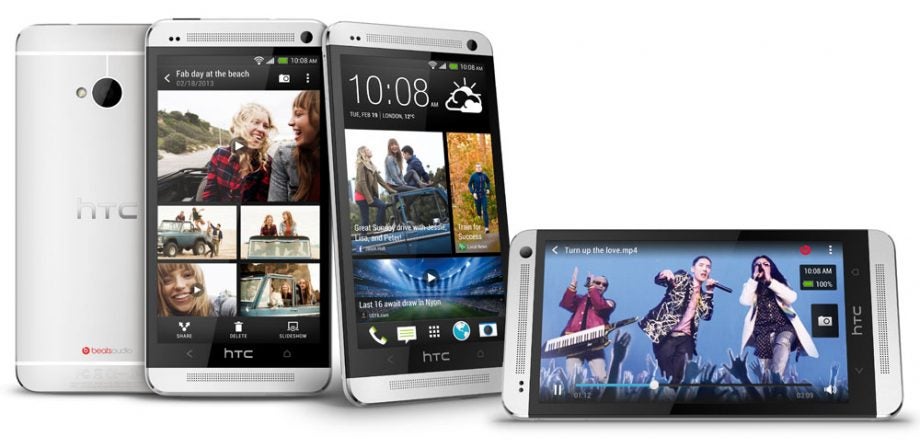
HTC has had a bit of a rough time in the mobile market over the last two years. Odd decisions and disappointing flagship phones have seen Samsung sail past HTC, where once it was a fierce rival for the title of King of Android. HTC wants to change all that with the HTC One, a powerful, advanced and mostly seriously impressive Android phone.
HTC One – Video review
HTC One – Design
One thing HTC has been pretty good at over the last few phone generations is in experimenting with different phone constructions. We’ve seen mobiles made of plastic, ceramic and metal – often within the same range. 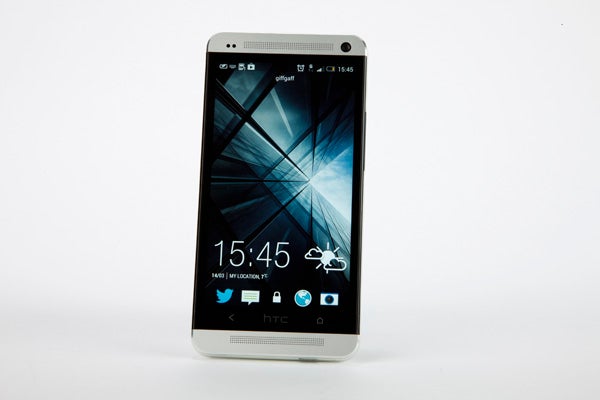
The HTC One opts for a mix of aluminium and white plastic. It’s a plastic-metal sandwich. The meat of the phone is aluminium, with just thin strips of white plastic running along the edges. Some have reported that these plastic parts are prone to cracking, but we didn’t experience any such issues.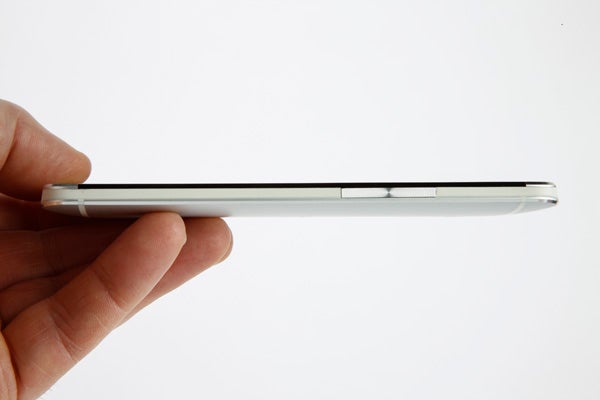
These aluminium plates give the phone the cool, hard feel that you get with an iPhone 5. If anything, though, the HTC One is ergonomically superior. Its rear is smoothly curved to hug your hand and its edges are bevelled to remove any sharp bits. Although its look may be a little severe, the feel of it is anything but.
This is certainly one of the most attractive phones availale, with a more striking, cohesive look than either the Sony Xperia Z or the Samsung Galaxy S4. It’s only the slightly aggressive styling that makes this feel like an HTC-designed device, rather than the one that could have slipped out of Apple’s labs.
The HTC One’s roll-call of attention grabbing elements is fairly long. We have the dual front speaker grilles, the oversized camera housing, the concentric circles texture of the volume rocker, and the high-contrast look of the front camera, light sensor and power button up top. 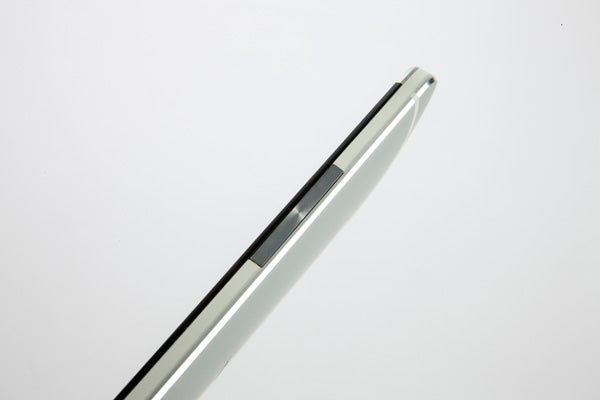
The HTC One is a looker, and a phone that’s easy to recognise in the ever-expanding sea of mobiles. It’s far more interesting to look at than its top rival the Samsung Galaxy S4.
Build quality is excellent too. The seams between the HTC One’s plastic and aluminium layers are tight aside from a tiny gap on the top edge of our review sample, and there’s none of the flex you’d see in a plastic-bodied phone. In-hand it feels much more expensive than the top Sony and Samsung phones.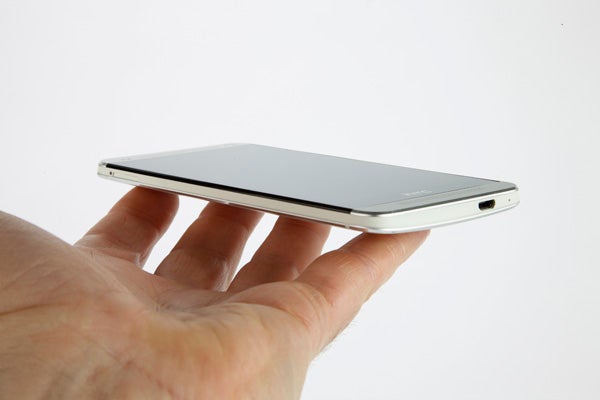
The cost of such immaculate design is that the innards of the HTC One are inaccessible unless you get out your Dremel and saw the thing in half. You have no access to the battery here, and there is no memory card slot, which you do get with the Sony Xperia Z. The phone also lacks that handset’s waterproofing, although this means you don’t have to deal with any irritating rubber-sealed flaps – used in ruggedised phones to keep water out of sockets.
The HTC One’s body also won’t appreciate rough treatment much. Aluminium feels great on the fingers, but it’s a relatively soft metal that will eventually get scratched by loose change and your car keys. However, after using the phone for weeks without masses of care, its bodywork is still looking good, with only the shiny sides of the body bearing particularly visible scratches.
The white plastic of the silver edition is a terrible dirt magnet, though – it’ll be fine one minute and covered in dark smudges the next. Unless your personal hygiene is much better than ours, of course. 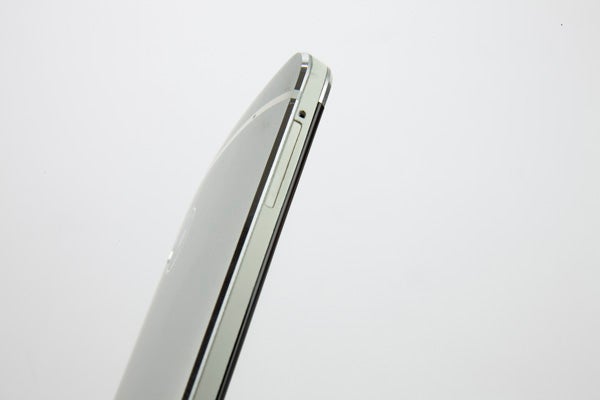
Like any phone this size, one of the trickiest bits to get used to is how large the screen is. It’s smaller than some – at 4.7 inches across when many new phones rock 5-inch displays – but reaching to the opposite end of the screen with a thumb is a real stretch. For right-handers, the power button also requires a stretch.
It’s one to add to the growing list of first-world problems – having a phone so big you need two hands to operate it.
However, the HTC One disappears into pockets easily enough, thanks to its fairly slim body. Its ergonomic curves ensure it’s not aggressively thin at 9.3mm thick, but we’d rather have a comfy phone than one whose figurative ribs poke through into your palm.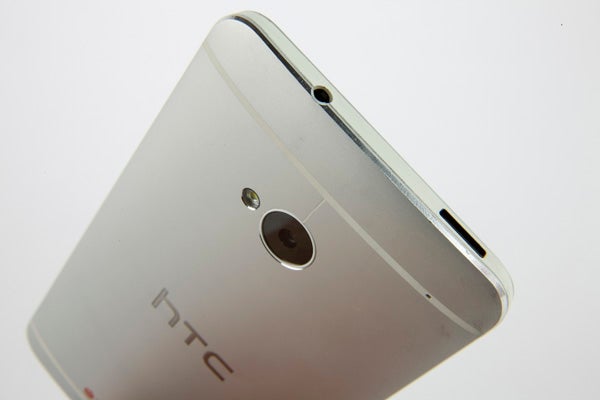
The HTC Phone’s two soft touch nav keys are easy enough to operate one-handed too, handling “back” and “Home” functions. They’re lit-up with swish-looking cool blue light when operated.
HTC One – Connectivity
With no removable backplate and no memory card slot, the HTC One keeps its on-body features simple. Offset from the centre of the phone’s bottom edge is the microUSB slot, which is used not only to charge the battery and transfer data, but can also transmit video and audio to an HDMI-equipped TV. This is because it’s MHL-compliant, giving it similar skills to a microHDMI connection. The required cable isn’t supplied with the phone, mind.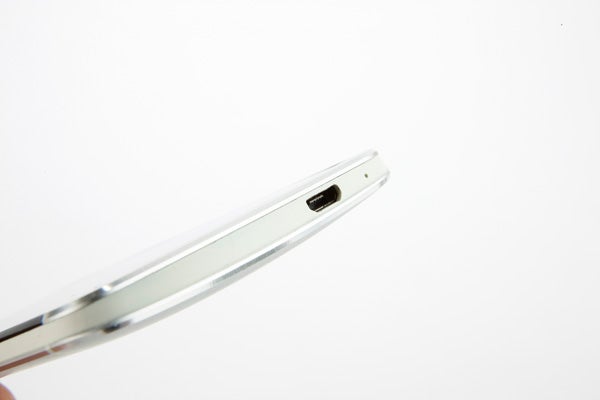
The only other connector socket you get with the HTC One is the obligatory 3.5mm headphone jack on the top edge.
Much like an iPhone 4S or a Nokia Lumia 720, the HTC One has a discreet microSIM tray that needs to be popped-out with the help of a paperclip – or the tool HTC supplies in the box.
Wireless connectivity is far more comprehensive than the old fashioned wired kind. Connections like GPS, HSPA and Bluetooth go without saying, and the HTC One also features NFC and – most interesting of the lot – an IR blaster. This is integrated into the power button up top, which helps to explain why it’s translucent black rather than more congruent matt white plastic. We’ll cover exactly what this is capable of when we talk about Sense TV later.
How we test phones
We test every mobile phone we review thoroughly. We use industry standard tests to compare features properly and we use the phone as our main device over the review period. We’ll always tell you what we find and we never, ever, accept money to review a product.


Editorial independence
Editorial independence means being able to give an unbiased verdict about a product or company, with the avoidance of conflicts of interest. To ensure this is possible, every member of the editorial staff follows a clear code of conduct.

Professional conduct
We also expect our journalists to follow clear ethical standards in their work. Our staff members must strive for honesty and accuracy in everything they do. We follow the IPSO Editors’ code of practice to underpin these standards.
Editorial independence
Editorial independence means being able to give an unbiased verdict about a product or company, with the avoidance of conflicts of interest. To ensure this is possible, every member of the editorial staff follows a clear code of conduct.
Professional conduct
We also expect our journalists to follow clear ethical standards in their work. Our staff members must strive for honesty and accuracy in everything they do. We follow the IPSO Editors’ code of practice to underpin these standards.